Every four years, African nations arrive at the World Cup carrying the hopes of a continent. Every four years, they leave before the semifinals. This pattern has repeated for decades, and the reason is becoming harder to ignore: Africa develops extraordinary individual talent but has failed to build the systems those players need to succeed at the highest level.
Continental Dominance in Club Football
African players have reshaped European football over the past twenty years. Mohamed Salah terrorises Premier League defences for Liverpool. Achraf Hakimi runs down the right flank for Paris Saint-Germain. In England, Spain, Italy, and Germany, African stars anchor title-winning squads. The continent's players are not merely participants in elite football — they are often the difference-makers.
The numbers confirm what fans see every weekend. African-born players now account for roughly 15 percent of all foreign players in Europe's top five leagues. Nigerian players alone represent a significant portion of those registrations, with the country consistently feeding talent to clubs across the continent. Yet when these same players reunite in national team colours, something breaks down.
The Paradox of African National Teams
Cameroon reached the quarterfinals in 1990 and again in 2022. Ghana made the quarterfinals that same year, only to fall to penalties against Uruguay. Nigeria has never advanced past the round of 16 in three attempts. The pattern holds: individual brilliance evaporates when players from rival domestic leagues are asked to function as a unit.
Part of the problem is structural. Unlike European national teams, whose players train together through youth academies and consistent tactical programmes, many African squads assemble for a few weeks before major tournaments. Coaches change frequently — sometimes between qualification rounds and the finals themselves — leaving players to learn new systems under pressure.
Administrative Instability
The Confederation of African Football has cycling presidents who serve overlapping terms, often prioritising personal networks over development programmes. National federations frequently lack the infrastructure to support elite youth development. Nigeria's Football Federation has cycled through several leadership crises in recent years, disrupting long-term planning and player identification systems.
These institutional failures create downstream effects. When a country's federation cannot guarantee consistent coaching appointments or adequate preparation funding, national teams enter tournaments already behind their competitors.
The Infrastructure Gap
Europe's top nations spent decades building football infrastructure that African countries cannot replicate overnight. Germany's network of 366 elite training centres, France's Clairefontaine academy system, and Spain's regional youth academies all operate with state support and long-term horizons. The investment creates a pipeline that feeds national teams automatically.
African nations face different constraints. Facilities exist in pockets — South Africa's Soccer City stadium, Morocco's Hassan II Academy, Senegal's facilities in Dakar — but comprehensive national systems remain rare. Without daily training environments designed for tactical development, players rely on club football alone, which often emphasises different priorities.
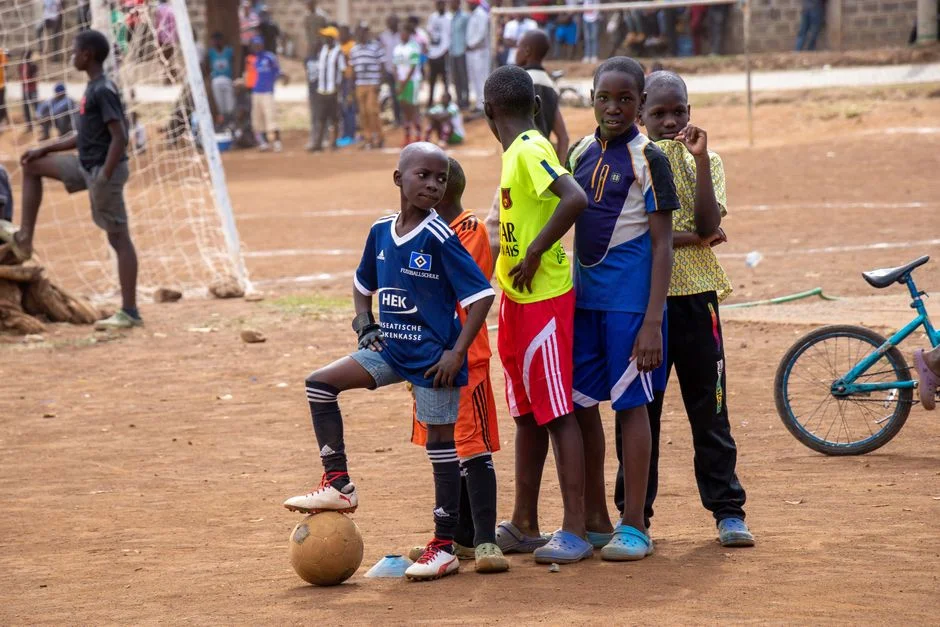
Private academies have emerged as a partial solution. Players such as Victor Osimhen emerged from Nigeria's Ultimate Professional Football Academy, which has produced professionals across several continents. Yet these academies serve relatively few players compared to the millions who could benefit from better public infrastructure.
Why the System, Not the Talent
The counterargument is straightforward: if African players dominate European clubs, why cannot they replicate that form for their national teams? The answer lies in environment. A player at Liverpool works within a system designed to maximise collective performance — specific pressing patterns, positional rotations, defensive structures. That player returns to a national team where weeks of preparation must compress years of tactical learning.
Southampton became known as a feeder club for African talent, developing players who moved to bigger Premier League sides. The club's system worked because it applied consistent principles across age groups and matches. National team football lacks that continuity, which is why the same players who excel in club football sometimes struggle internationally.
Coaching quality compounds the issue. The best African coaches often coach in Europe, while national team positions frequently go to foreign managers hired on short contracts. Without buy-in from local football cultures and without long-term mandates, even well-intentioned coaches cannot rebuild systems that took decades to create.
What Would Actually Change Things
Reform requires multiple simultaneous changes. First, national federations need external auditing of financial management, with development funding ringfenced for youth infrastructure rather than administrative overhead. Second, African nations should explore regional collaboration — a West African youth league, for instance, could pool resources and create competitive environments currently available only in Europe.
Third, the relationship between clubs and federations must shift. In Europe, clubs release players for international duty because the system incentivises participation. In Africa, players sometimes refuse national team call-ups because of inadequate support, insurance gaps, or unpaid bonuses. The CAF must enforce compliance mechanisms that protect players and ensure national teams can rely on their best talent.
Watching the Next Cycle
The 2026 World Cup, expanded to 48 teams, will give Africa additional slots. Morocco, which reached the semifinals in Qatar, has already begun investing in infrastructure with an eye toward building on that performance. The kingdom's success may provide a model — or at least a proof of concept — for what systematic investment can achieve.
Nigeria, Ghana, and Cameroon will likely qualify with the new format, but qualification is not the goal. The question is whether expanded participation will drive genuine reform or simply provide more opportunities for the same systemic failures to repeat. That answer will emerge over the next qualification cycle and the tournament that follows. For now, African football's talent pipeline remains world-class. Everything built around it lags behind.
See Also
- Swami Abhedananda Celebrates 20 Years of Impact in South Africa’s Spiritual Landscape
- Kenya Forces France to Rethink African Strategy in Nairobi
Players such as Victor Osimhen emerged from Nigeria's Ultimate Professional Football Academy, which has produced professionals across several continents. That answer will emerge over the next qualification cycle and the tournament that follows.
What is the latest news about why africa keeps producing world cup stars but never wins the tournament?
Why does this matter for health-medicine?
What are the key facts about why africa keeps producing world cup stars but never wins the tournament?