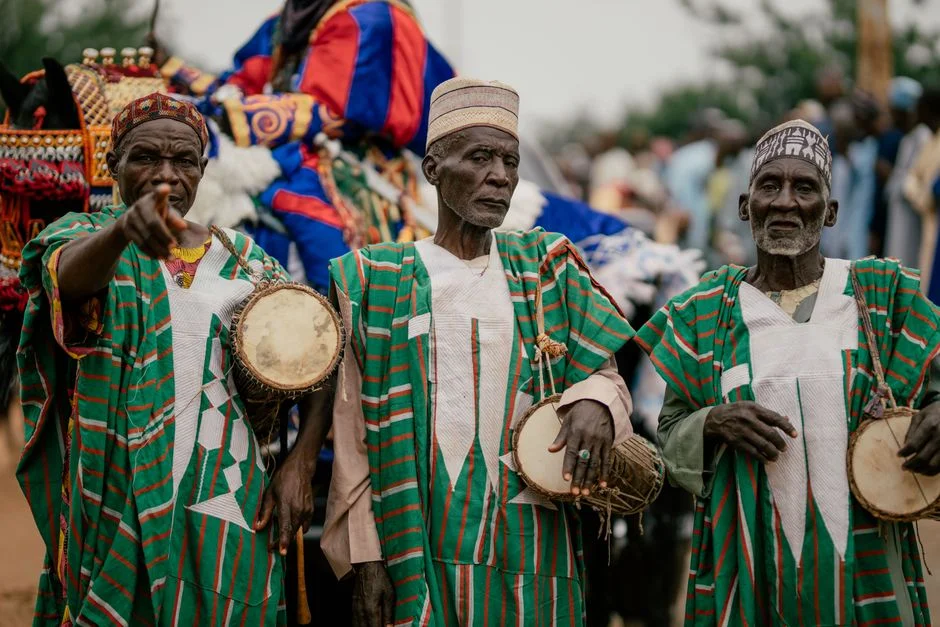
A new stage production by Lagos-based playwright Lanre Olagunju is drawing sharp attention across Nigeria after debuting last weekend at the Terra Kulture Arts Centre in Victoria Island. The play, titled "When We Laugh at the Police, Are We Really Laughing at Ourselves?" arrives at a moment when public trust in law enforcement remains fragile following years of reported misconduct and scattered reform efforts.
The Production and Its Central Question
The work unfolds across two acts, following ordinary Nigerians who encounter police checkpoints, roadside stops, and station encounters. Olagunju uses comedy to expose the absurdity of interactions that many audience members recognise from daily life. The production does not offer easy answers. Instead, it asks viewers to sit with an uncomfortable possibility: that society's habit of mocking police behaviour might be a way of avoiding accountability for the conditions that produce it.
Speaking to journalists at the opening night, Olagunju described the project as something that had been developing for three years. He said he wanted to create a space where laughter and reflection could happen simultaneously. The cast features six performers, including some who have previously worked with the National Troupe of Nigeria.
The Comedy That Cuts
Early reviews from theatre critics describe the production as both hilarious and unsettling. A recurring bit involving a fictional traffic officer who issues fines for imaginary violations drew sustained applause during the preview performance. Yet the humor carries a secondary layer. Olagunju seems to suggest that finding these scenarios funny is itself a form of normalisation.
The play also references several high-profile incidents that have circulated widely on Nigerian social media, where citizens have filmed or narrated their own confrontations with officers. These real-life moments, reimagined on stage, create a direct line between performance and lived experience for many in the audience.
Nigeria's Complicated History with Law Enforcement
The production arrives against a backdrop of ongoing tension between Nigerian citizens and police forces. The Special Anti-Robbery Squad, disbanded in 2020 following widespread protests, was replaced by the Special Weapon and Tactics Team. Community advocates say trust has been slow to rebuild, with reports of harassment continuing to surface in media and on human rights platforms.
Olagunju does not present police officers as villains alone. Several characters in the play are shown struggling with institutional pressure, limited resources, and genuine attempts to do their jobs correctly. This nuanced portrayal has drawn particular commentary, with some viewers saying it prevents the work from becoming simple propaganda.
Audience Reactions and Cultural Impact
Three performances have taken place since the premiere, with tickets selling out within hours of each announcement. Social media platforms have amplified discussion, with viewers sharing personal stories of police encounters using a hashtag tied to the production. Many comments describe the play as the first time they have seen their own experiences translated into theatre.
Not all reactions have been positive. Some critics within Nigeria's arts community have argued that the play does not go far enough in condemning systemic problems. Others suggest that presenting complex issues through comedy risks softening genuine grievances. These disagreements have only increased the volume of public conversation around the production.
What Comes Next
Organisers have announced plans to take the production to Abuja and Port Harcourt in the coming months. A touring schedule is expected to be published by the end of the month. Beyond Nigeria, Olagunju's representatives say they have received inquiries from theatre festivals in Ghana and the United Kingdom about potential international dates.
Whether the play can sustain this level of attention remains to be seen. What seems certain is that Olagunju has created a cultural moment that many in Nigeria are reluctant to let pass quietly. Audiences will return to theatres in Lagos this weekend for the final scheduled performance of the initial run.
Broader Questions About Art and Accountability
The production raises questions that extend beyond entertainment. In a country where art frequently grapples with governance failures, the play occupies a particular space: it does not call for specific policy changes or name particular officers. Instead, it places responsibility for the police-society relationship on all participants in Nigerian life. That positioning has made the work difficult to categorise, and that ambiguity appears to be exactly what Olagunju intended.
The Terra Kulture venue has extended weekend hours to accommodate demand. Box office staff say they have never seen this level of advance interest for a new Nigerian production in recent memory. Whatever happens next, the conversation the play has started appears unlikely to end when the curtains close.
See Also
- Júlio Machado Vaz Highlights Youth Loneliness Amid Technological Advancements
- Andrade Restores Power Post-Storms: Implications for Nigeria's Development