Kenya's President William Ruto has publicly defended a United States government facility operating on Kenyan soil, as protests demanding its closure intensify over fears the site could become a vector for Ebola transmission. The confrontation puts the Nairobi government in a difficult position, balancing its strategic partnership with Washington against public health anxieties sweeping through communities near the facility.
Protests Demand Closure of US Facility
Demonstrators gathered outside the perimeter of the US-supported installation this week, calling on authorities to shut down operations immediately. Local residents voiced concerns that the facility, whose precise purpose has not been fully disclosed to the public, could facilitate the spread of Ebola from neighbouring countries where the virus remains active. Organisers of the protests said they have collected thousands of signatures on a petition demanding transparency about what materials and personnel pass through the site.
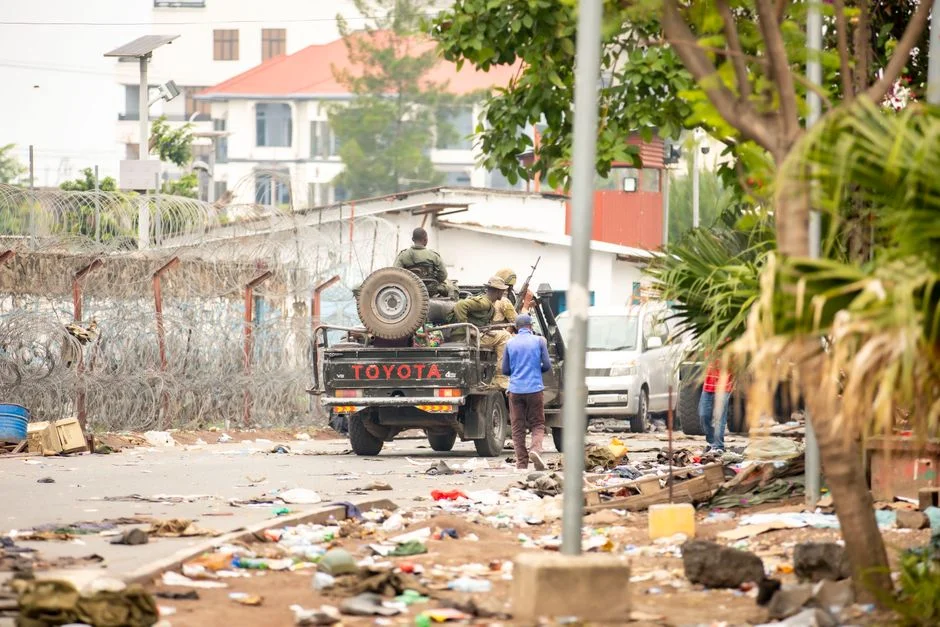
The demonstrations have disrupted traffic near the facility's access road, with police deployed to manage crowds. No injuries were reported during the initial protests, though tensions remain high between demonstrators and security forces.
Ruto Insists Site Poses No Health Risk
President Ruto addressed the controversy directly, telling reporters the facility meets all international health protocols and poses no credible threat to Kenyan communities. The government has consistently maintained that all personnel entering or exiting the site undergo rigorous screening procedures aligned with World Health Organisation standards. Ruto stressed that Kenya's relationship with the United States remains vital for national development, pointing to joint programmes in security, health infrastructure, and trade.
The President stopped short of revealing the specific functions of the facility, citing operational security considerations. His administration has previously faced criticism from opposition figures who argue that such undisclosed agreements with foreign powers lack parliamentary oversight. The government counters that many aspects of bilateral defence cooperation require confidentiality to remain effective.
Regional Ebola Concerns Fuel Public Anxiety
The protests reflect broader anxiety about disease preparedness across East Africa, where Ebola outbreaks have periodically flared in the Democratic Republic of Congo and Uganda. Health authorities in Kenya maintain that no cases of Ebola have been detected within the country's borders, and border screening for travellers arriving from at-risk regions has been stepped up in recent months. The health ministry reported that more than 200,000 travellers have been screened at points of entry since January.
Public health experts have noted that community distrust of government health facilities and foreign-run installations runs deep in some regions, shaped by past experiences with inadequate care and cultural insensitivity. The current protests draw on these grievances, organisers say, even as officials insist the concerns about the US site are unfounded.
US-Kenya Strategic Partnership Under Strain
The United States Embassy in Nairobi has not issued a public statement about the protests, following standard diplomatic practice of deferring to host-country authorities on domestic matters. American officials have privately conveyed to Kenyan counterparts that they view the facility as essential to shared security objectives in the region, according to a source familiar with the discussions who spoke on condition of anonymity. The US cooperation agreement with Kenya covers counter-terrorism, maritime security, and health research, though the specific installation at the centre of protests is understood to serve intelligence-sharing functions.
Analysts suggest the controversy arrives at an awkward moment for both governments. Kenya is seeking increased American investment and trade benefits through the Agoa trade framework, while Washington values Nairobi's role as a regional anchor for its diplomatic and military presence in East Africa. Any visible rupture in the partnership could invite scrutiny from other regional partners watching the relationship closely.
Political Opposition Joins the Criticism
Kenyan opposition politicians have seized on the protests to demand greater transparency about foreign military and intelligence installations operating in the country. Several lawmakers called for a parliamentary inquiry into existing agreements with the United States, arguing that the executive branch cannot sign away Kenyan sovereignty without legislative approval. The constitution requires that international agreements affecting national sovereignty be ratified by parliament, though the executive has sometimes interpreted this requirement narrowly.
The protests have also energised civil society groups focused on land rights, since some communities near the facility claim they were not adequately consulted when arrangements were made for its establishment. Legal challenges to the site's operating status have been filed in Kenyan courts, though none have succeeded in halting operations pending further proceedings.
What Happens Next
The government faces pressure to find a resolution before protests escalate further. Ruto's administration must weigh the political cost of appearing dismissive of public health concerns against the diplomatic consequences of undermining a key security partner. The health ministry has indicated it will host a community forum in the coming weeks to address questions directly, though critics question whether such meetings will produce meaningful information about the facility's operations.
Watch for whether parliamentary leaders push forward with calls for a formal inquiry, and whether the United States signals any willingness to increase transparency about the installation's functions. The next few weeks will test whether the Ruto government can defuse the situation through dialogue or whether protests will expand to additional cities.
See Also
- India's Foreign Policy Falters as Pakistan Gains Global Acceptance
- SSUS Students Demand Action as Faculty Ratio Reaches 1:150 — Crisis Looms
Analysts suggest the controversy arrives at an awkward moment for both governments. Ruto's administration must weigh the political cost of appearing dismissive of public health concerns against the diplomatic consequences of undermining a key security partner.
What is the latest news about president ruto defends us facility in kenya as ebola protests grow?
Why does this matter for politics-governance?
What are the key facts about president ruto defends us facility in kenya as ebola protests grow?