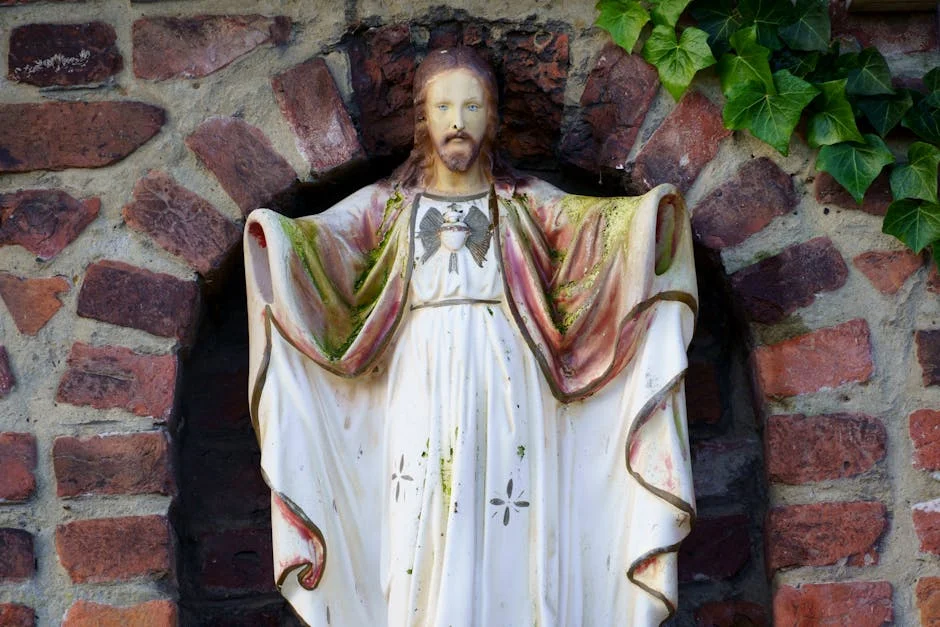
A Israeli soldier sledgehammered a statue of Jesus in a town in southern Lebanon, sparking outrage and diplomatic tensions between the two countries. The incident occurred on Monday in the village of Qana, a region that has long been a flashpoint in the Israel-Lebanon conflict. The act, described by local officials as a deliberate provocation, has raised concerns over the escalating violence along the border, which has seen a surge in cross-border incidents in recent months.
Incident Details and Immediate Reactions
The attack took place in Qana, a town near the border with Israel, where a statue of Jesus had been erected in a public square. According to local media reports, an Israeli soldier, identified only as a member of the Israeli Defence Forces (IDF), used a sledgehammer to destroy the statue during an unexplained patrol. The incident was captured on video and shared widely on social media, drawing condemnation from Lebanese authorities and religious leaders.
Lebanon’s Ministry of Foreign Affairs issued a statement condemning the act as “an act of aggression and disrespect for religious symbols.” The statement called for an investigation and urged international bodies to intervene. Meanwhile, the IDF confirmed that an inquiry was underway, but did not provide further details about the soldier’s motives or actions.
The destruction of the statue has deepened tensions in an already volatile region. Qana has been the site of past clashes between Israeli and Lebanese forces, with both sides accusing each other of cross-border attacks. The incident has also raised concerns about the impact of the ongoing conflict on civilian infrastructure and cultural heritage.
Broader Implications for Regional Stability
The attack on the statue of Jesus highlights the fragile state of relations between Israel and Lebanon, two nations that have a history of military confrontation. While the two countries have not formally declared war since the 1978 and 1982 conflicts, skirmishes along the border have remained frequent. The incident in Qana adds to a growing list of tensions that have been exacerbated by the broader Middle East conflict, particularly the ongoing war in Gaza.
Lebanon’s Prime Minister, Najib Mikati, has called for an urgent meeting with regional leaders to address the situation. He emphasized that the attack “threatens the peace and stability of the entire region.” The incident also has implications for the United Nations, which has a peacekeeping force stationed along the border, known as UNIFIL. The UN has called for restraint and urged both sides to avoid further escalation.
For African nations, the incident underscores the importance of regional diplomacy and the need for multilateral efforts to prevent the spread of conflict. Many African countries have expressed concern over the growing instability in the Middle East, as it has the potential to affect global trade routes and regional security. The African Union has called for increased dialogue between Israel and Lebanon to de-escalate tensions and prevent further violence.
Impact on Religious and Cultural Symbols
The destruction of the statue has been widely seen as a violation of religious and cultural heritage. In Lebanon, where Christianity has a significant presence, the act has been condemned as an attack on the country’s religious identity. The statue, which had been a symbol of peace and unity in the community, was reportedly funded by local Christians and was a popular site for visitors.
Religious leaders in Lebanon have called for greater protection of cultural and religious sites in the region. “This is not just an attack on a statue — it is an attack on our shared values,” said Father Joseph Khoury, a local priest. “We must stand together to protect our heritage and promote peace.”
The incident has also sparked a debate about the role of religious symbols in conflict zones. In recent years, there have been multiple reports of religious sites being targeted in the Middle East, raising concerns about the vulnerability of cultural heritage in times of war. The destruction of the statue in Qana is another example of how religious and cultural symbols can become battlegrounds in broader conflicts.
What to Watch Next
The situation remains volatile, with both Israel and Lebanon under pressure to de-escalate tensions. The United Nations has called for an immediate investigation into the incident, and the International Criminal Court (ICC) has been urged to consider whether the act constitutes a war crime. Meanwhile, Lebanon has requested that the ICC investigate potential violations of international law by Israeli forces in the region.
Prime Minister Benjamin Netanyahu of Israel has not yet commented directly on the incident, but his government has faced growing criticism from within and outside the country. The incident has also sparked renewed calls for a lasting peace agreement between Israel and Lebanon, which has been a long-standing goal of regional diplomacy.
As the situation unfolds, African nations will be watching closely. The incident in Qana serves as a reminder of the interconnectedness of global conflicts and the need for sustained international engagement to prevent further instability. The coming weeks will be critical in determining whether the situation can be brought under control or if it will escalate into a broader regional crisis.