Singapore's Land Transport Authority (LTA) confirmed a sharp decline in the reliability of the Downtown Line and Thomson-East Coast Line in March, raising concerns about the city-state's public transport system. The Downtown Line, which serves major commercial hubs like Marina Bay and Raffles Place, saw its punctuality drop to 92.4%, down from 95.1% in February. Meanwhile, the Thomson-East Coast Line, a newer route, experienced delays that disrupted daily commutes for thousands of residents. The LTA attributed the issues to ongoing maintenance work and increased passenger demand.
Reliability Decline Sparks Public Concern
Public frustration has grown as commuters face longer wait times and overcrowded trains. The Downtown Line, a critical artery for business and tourism, is now operating at its lowest reliability level since 2021. "I used to rely on the Downtown Line to get to work in under 30 minutes. Now, it's taking over an hour," said Lim Wei Jie, a finance professional in the city center. The LTA has acknowledged the problem and is working to address it through increased staffing and system upgrades.
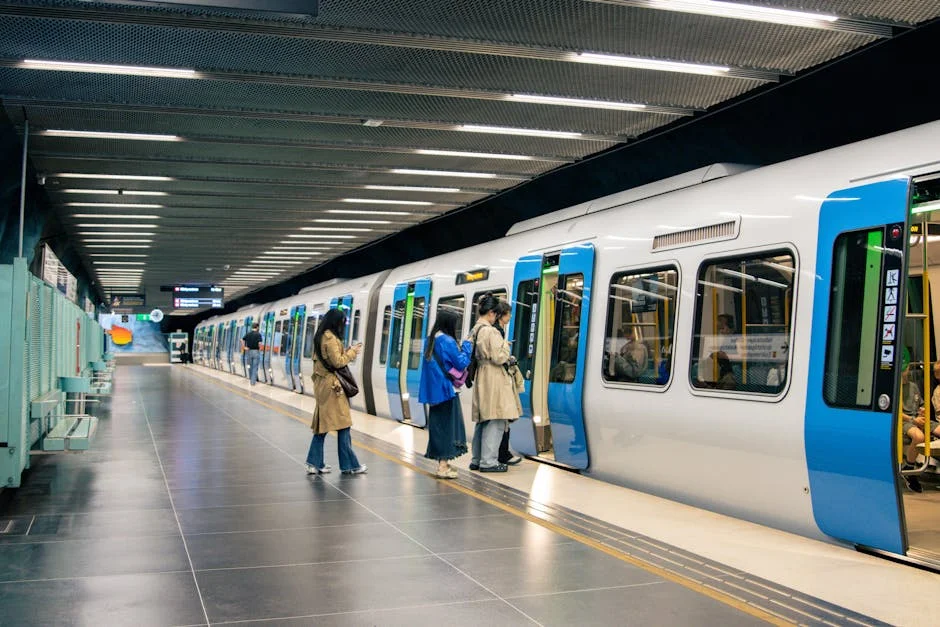
The Thomson-East Coast Line, launched in 2020, is also experiencing setbacks. While the line was initially praised for its modern design and connectivity, recent technical glitches have led to service disruptions. The LTA has scheduled additional maintenance and is testing new signaling systems to improve performance. "We are committed to ensuring a smooth and efficient service for all passengers," said LTA spokesperson Tan Mei Ling.
Impact on Urban Mobility and Economic Activity
The decline in subway reliability has broader implications for Singapore's economy. As a global financial hub, the city-state relies heavily on efficient public transport to maintain its competitive edge. Delays on key lines could deter foreign investment and affect business operations. "A reliable transport system is essential for attracting and retaining talent and capital," said Dr. Aminah Khoo, an urban development expert at the National University of Singapore.
Transport issues also affect the daily lives of millions. The Downtown Line connects major residential areas to commercial districts, and its performance directly impacts the productivity of workers. With the city's population continuing to grow, the pressure on the transport network is expected to increase. "We need to invest in infrastructure that can keep up with demand," said Dr. Khoo.
Comparing Performance Across Lines
While the Downtown and Thomson-East Coast Lines faced challenges, the Circle Line saw an improvement in reliability. The line, which serves areas like Outram and Tanjong Pagar, recorded a 96.8% on-time performance in March, up from 94.5% the previous month. This contrast highlights the uneven progress in Singapore's public transport network.
The LTA has been working on a long-term plan to modernize the subway system, including the introduction of automated trains and expanded stations. However, the recent setbacks show that the transition is not without obstacles. "We are aware of the challenges and are taking steps to resolve them," said Tan Mei Ling.
Future Steps and Challenges
The LTA has announced a series of initiatives to improve subway reliability, including the deployment of additional maintenance crews and the installation of new monitoring systems. The agency is also conducting public consultations to gather feedback from commuters. "Your input is crucial in helping us shape a better transport system," said Tan Mei Ling.
Looking ahead, the LTA plans to release a detailed report on the performance of the subway network by the end of April. The report will include data on delays, maintenance schedules, and proposed improvements. Commuters are encouraged to follow updates through the LTA's official website and social media channels.
The reliability of Singapore's subway system is a key indicator of the city-state's ability to manage urban growth and maintain its global standing. As the population continues to rise, the need for a robust and efficient transport network becomes even more pressing. Commuters and business leaders alike are watching closely to see how the LTA will address these challenges in the coming months.