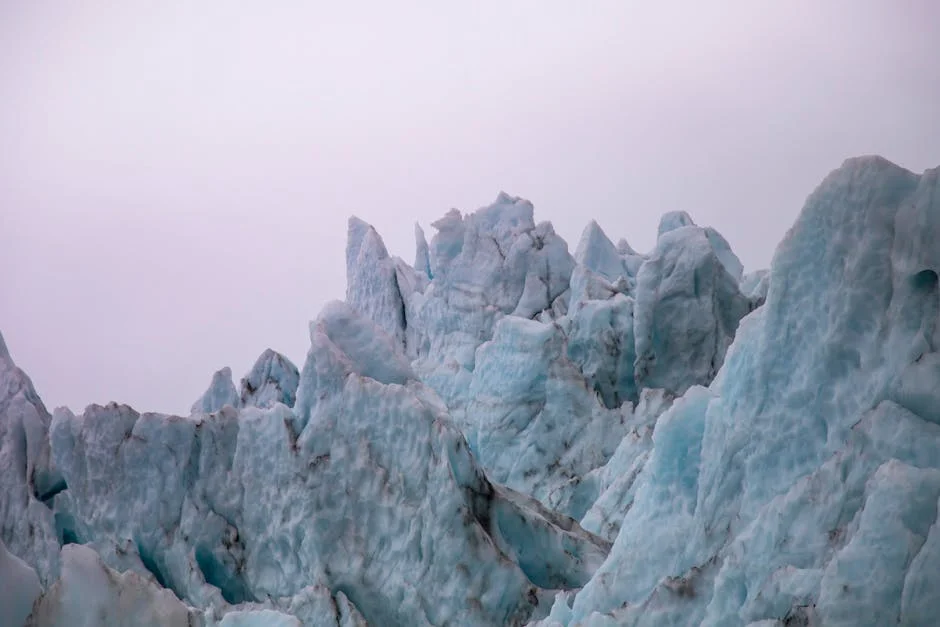
Argentina's glaciers are vanishing at an alarming rate, sparking urgent warnings from scientists about the long-term water crisis that could hit the region. The country's Andean glaciers, a critical source of freshwater for millions, have lost over 20% of their mass since the 1980s, according to a recent study by the National Scientific and Technical Research Council (CONICET). The shrinking ice is not just a local issue — it has broader implications for water security across South America, a region that shares similar environmental challenges with parts of Africa.
Glacier Retreat Linked to Climate Change
Scientists at CONICET have documented a rapid decline in Argentina’s Andean glaciers, with some areas losing up to 1.5 meters of ice per year. Dr. Laura Fernández, a glaciologist at the University of Buenos Aires, explained that rising temperatures and reduced snowfall have accelerated the melting process. "Every drop of water counts in the arid regions of Argentina, and the loss of glaciers threatens agricultural production and urban water supplies," she said.
The impact is most visible in the Mendoza region, where vineyards and farms depend on glacial meltwater. Local farmers report that water availability has become increasingly unpredictable, forcing them to invest in costly irrigation systems. "We used to rely on the glaciers to feed our crops during the dry season, but now we're running out of water earlier each year," said José Martínez, a third-generation farmer in Mendoza.
Global Implications for Water Security
The crisis in Argentina mirrors challenges faced by many African nations, where access to clean water remains a pressing issue. According to the United Nations, 40% of Africa’s population lacks access to safe drinking water, and climate change is expected to worsen the situation. The loss of glacial water sources in Argentina highlights the vulnerability of regions that depend on seasonal snowmelt for their water supply — a dynamic that also exists in parts of East Africa, such as the Ethiopian highlands.
Experts warn that the disappearance of glaciers could lead to prolonged droughts, reduced agricultural output, and increased migration. In the Sahel region, for example, erratic rainfall patterns have already displaced millions. The situation in Argentina serves as a warning for African countries that are also grappling with the dual pressures of population growth and environmental degradation.
Policy Responses and International Cooperation
Argentina has begun to address the crisis through national water management strategies, but experts argue that more needs to be done. The government has launched a $50 million initiative to improve water storage and conservation, but critics say it falls short of the scale needed to combat the long-term effects of climate change. "We need to invest in sustainable infrastructure and early warning systems to protect vulnerable communities," said Dr. Fernández.
International cooperation is also key. The United Nations has called for greater collaboration between South American and African nations to share best practices in water management. In 2023, a joint initiative between the African Union and the Southern Common Market (MERCOSUR) aimed to strengthen climate resilience across the continent. However, funding and political will remain major hurdles.
Lessons for Africa’s Development Goals
The Argentine glacier crisis underscores the importance of integrating climate adaptation into development planning. For Africa, this means prioritizing water infrastructure, promoting sustainable agriculture, and investing in climate education. The United Nations Sustainable Development Goals (SDGs), particularly Goal 6 on clean water and sanitation, are more relevant than ever.
As the global community faces increasing climate-related challenges, the experiences of countries like Argentina offer valuable insights. African nations must proactively address water scarcity to ensure food security, economic growth, and social stability. The stakes are high — and the time to act is now.
The next few years will be critical for Argentina and other regions facing similar challenges. With the 2024 United Nations Climate Conference (COP29) approaching, global leaders will have a chance to accelerate climate action. For now, the message is clear: every drop of water counts, and the future of water security depends on immediate and coordinated efforts.
Policy Responses and International Cooperation Argentina has begun to address the crisis through national water management strategies, but experts argue that more needs to be done. The government has launched a $50 million initiative to improve water storage and conservation, but critics say it falls short of the scale needed to combat the long-term effects of climate change.