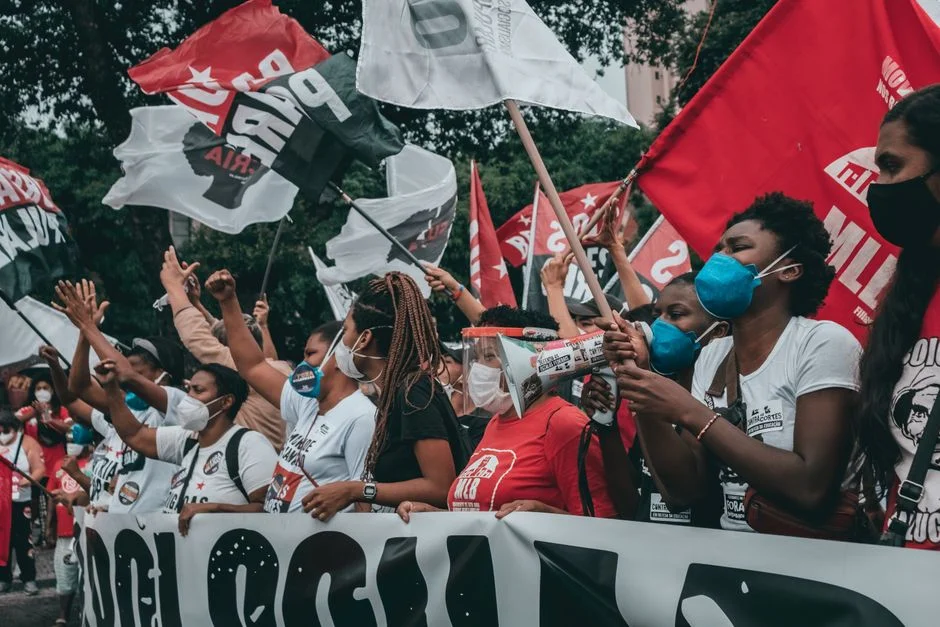
On June 16, 1976, thousands of students in Soweto walked out of their classrooms and into the pages of history. Fifty years later, South Africa paused to remember the Soweto Uprising, an event that exposed the brutality of apartheid education policies and sparked a wave of resistance that would ultimately help bring down the entire system. The commemoration brought together survivors, government officials, and young activists asking uncomfortable questions about how much has truly changed.
What Happened in Soweto on June 16, 1976
The protest began peacefully. Approximately 20,000 students from schools across Soweto marched to demonstrate against the apartheid government's decree that Afrikaans must be used as the medium of instruction in Black schools. The regime had designated the language — associated with the oppressor — as mandatory for mathematics, history, and geography. Students saw it as another tool of cultural erasure. Police opened fire without warning. Hector Pieterson, a 12-year-old student, became the first documented casualty. He was shot in the back. The image of his body carried by a fellow student, Mbuyisa Makhubu, travelled around the world and became the defining photograph of the uprising.
The killing of Pieterson did not end the protest. It emboldened it. Over the following days, demonstrations spread to other townships around Johannesburg and into the Cape Peninsula. The apartheid regime declared a state of emergency. By the time the violence subsided, between 176 and 700 people had died — estimates vary because the government controlled information flow. More than 1,000 were injured. Among the dead were children as young as nine.
The Apartheid Regime's Education Policy That Sparked the Uprising
The instruction policy, known as Memorandum 274, forced Black students to learn in Afrikaans starting in the fourth grade. Teachers who resisted faced dismissal. The policy was part of a broader Bantu Education Act designed to prepare Black South Africans only for manual labour while keeping Afrikaans as the language of administration and commerce. The government justified it as a way to improve educational outcomes. Black South Africans understood it as another mechanism of control.
June 16 was not the first act of resistance against the policy. Students in schools outside Soweto had already begun organising. When the protests began in earnest, the African National Congress Youth League and other underground movements took notice. The uprising helped shift the liberation struggle from armed resistance to mass mobilisation among ordinary people. It showed the world that young people were willing to die for the right to learn in their own language.
Survivors Return to the Memorial Site
At the Hector Pieterson Memorial in Soweto, survivors gathered for the official ceremony. The museum, built near the spot where Pieterson fell, now receives visitors from across the globe. Among those present was a former student who described hiding under a bridge for three days as police conducted house-to-house searches. She recalled watching classmates shot in the street. She is now 63 years old. Many of her friends from that day did not reach her age.
The South African government sent a delegation led by the Deputy Minister of Sports, Arts and Culture. A wreath-laying ceremony took place at the memorial fountain, where the names of those killed are carved in stone. The South African Democratic Teachers' Union used the occasion to call for a review of language policies still in place at public schools. Several learners in rural provinces continue to receive instruction in Afrikaans or English despite speaking different home languages.
Young Activists Question the Legacy
The commemoration arrived at a difficult moment for South Africa's youth. Unemployment among people aged 15 to 34 stands above 40 percent. Many young Black South Africans argue that economic liberation has not followed political liberation. At a panel discussion held at the University of Johannesburg, activists born after 1994 confronted veterans of the uprising with a direct question: did the sacrifice of June 16 deliver meaningful change, or did it merely replace a white elite with a Black one?
The tension was palpable. One panellist argued that the education system remains deeply unequal, with historically Black schools still underfunded compared to former Model C institutions that were originally designed for white students. Another pointed to the persistent wealth gap. Land ownership patterns have barely shifted. The students who marched in 1976 fought for dignity and opportunity. Their grandchildren are still waiting for both.
Global Resonance of a Local Uprising
June 16 has been officially recognised as International Day of the African Child in several countries beyond South Africa's borders. In Nigeria, civil society groups held a parallel event at the University of Lagos, drawing attention to parallels between apartheid-era discrimination and ongoing marginalisation of minority communities. The discussion centred on how movements against racism remain unfinished across the continent and in the diaspora.
The Black Lives Matter movement in the United States has cited the Soweto Uprising as a historical precedent. Scholars note that the global anti-apartheid campaign drew support from trade unions in Britain, religious organisations across Europe, and student bodies in the United States. June 16 became a symbol not only of South African resistance but of the worldwide refusal to accept racial hierarchy as permanent.
What Comes After the Memorials
The South African government has announced a national dialogue on educational equity to begin in September. Education officials will travel to twelve provinces to gather testimony from teachers, learners, and parents about current challenges in schools. The programme is modelled on the Truth and Reconciliation Commission process that followed apartheid's end. The Education Ministry set a deadline of December for submitting findings to Parliament.
Critics argue that dialogues alone will not close the gap between promise and reality. They point to the 2021 finding that nearly 80 percent of public schools in South Africa lack basic infrastructure such as libraries or laboratories. The anniversary will have meant something only if the education system that produced the Soweto generation receives the investment it demands. What happens next will determine whether the commemoration becomes a genuine turning point or simply another date on the calendar.
See Also
- Gambia Condemns South Africa's Xenophobic Violence — Urges African Unity
- Trump Labels Khamenei's Son 'Lightweight': What It Means for Iranian Politics and Africa
Critics argue that dialogues alone will not close the gap between promise and reality. Several learners in rural provinces continue to receive instruction in Afrikaans or English despite speaking different home languages.