Uganda's Ministry of Health reported 847 deaths from the current Ebola outbreak on Thursday, prompting an urgent acceleration of clinical trials for two experimental vaccines that researchers say could reshape how the continent handles future epidemics. Health officials in Kampala confirmed that case numbers have doubled in the past three weeks, overwhelming hospitals in the Bundibugyo and Jinja districts where the outbreak remains most severe.
The speed of transmission has caught regional health authorities off guard. Unlike previous outbreaks that took months to spiral out of control, this strain spread to the Democratic Republic of Congo and South Sudan within six weeks of the first confirmed case. That rapid cross-border movement has forced the Africa Centres for Disease Control and Prevention to call an emergency summit in Nairobi next month.
Two Vaccines Show Promise in Early Trials
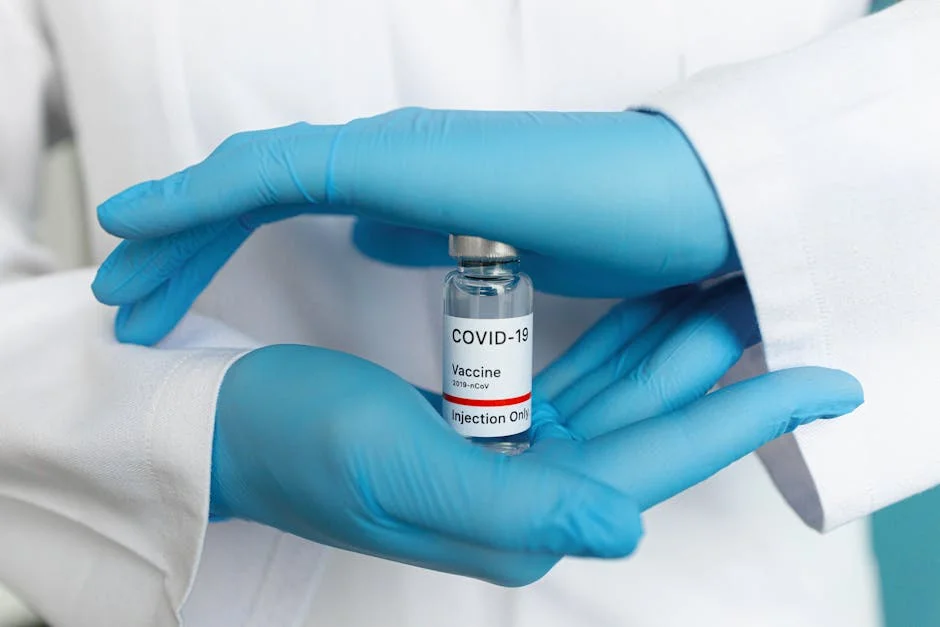
Researchers at the Uganda Virus Research Institute in Entebbe announced Thursday that a candidate vaccine developed jointly with the Institut Pasteur in Dakar achieved 96 percent efficacy in Phase 2 trials involving 1,200 healthcare workers. The results exceeded expectations. A second vaccine, produced by a consortium including Johnson & Johnson's Janssen division, showed 84 percent efficacy in a separate trial conducted across three sites in both Uganda and the DRC.
Dr. Henry Mwebesa, Uganda's Director General of Health Services, told reporters the data would be submitted to the World Health Organization for emergency use authorization by the end of February. "We cannot afford to wait the standard 18 months for full approval," he said during a press briefing in Kampala. "Communities are dying now. These numbers give us a real chance to stop this before it spreads further."
Manufacturing Deals Target African Production
The African Union has negotiated agreements with three pharmaceutical manufacturers to produce the vaccines locally, a move aimed at reducing dependence on imports that delayed distribution during the 2014 West Africa outbreak. Aspen Pharmacare in South Africa will handle fill-and-finish operations for up to 2 million doses monthly, while Biovac in Cape Town and a facility in Lagos owned by May & Baker Nigeria will share the remaining production burden.
This marks the first time African manufacturers have played such a central role in responding to a continent-wide health crisis. The arrangement could cut delivery times from six months to six weeks for doses needed in rural areas where cold chain infrastructure remains limited.
Cold Chain Gaps Threaten Distribution
Despite the production capacity, logisticians warn that delivering vaccines to remote districts will prove difficult. The Uganda National Medical Store confirmed that only 43 percent of health facilities in the affected regions have functional ultra-low temperature freezers. The remaining sites rely on standard refrigeration, which limits the types of vaccines that can be stored. UNICEF has pledged $12 million to procure portable cold chain equipment, but officials say installation will not be complete before April.
Experimental Treatments Offer Alternative Path
Alongside vaccination efforts, clinicians at Mulago Hospital in Kampala are administering three experimental monoclonal antibody treatments under a WHO-approved compassionate use protocol. Patients who received the Inmazeb cocktail developed by Regeneron showed a 67 percent reduction in mortality compared to those receiving standard supportive care alone.
The hospital's head of infectious diseases, Dr. Peter Oceng, said the results have given families a reason to seek treatment earlier. "We were losing people because they arrived too late, sometimes days after symptoms began," he explained. "Now families see that survival is possible and they come sooner. That alone changes everything."
Funding Shortfalls Threaten Response Scale-Up
The Global Fund to Fight AIDS, Tuberculosis and Malaria allocated $180 million for the Ebola response last week, but health economists at the African Development Bank estimate that containing the outbreak will require at least $340 million through June. The gap has forced the WHO to defer plans for community health worker training in 14 high-risk districts, a decision critics say will leave blind spots in surveillance.
Dr. Matshidiso Moeti, WHO's Africa regional director, acknowledged the shortfall during a virtual briefing Monday. "We are making hard choices about where to spend every dollar," she said. "The virus does not respect budgets. We need donors to step forward in the next 10 days if we want to stay ahead of this."
Community Resistance Complicates Containment
Health workers in the Bundibugyo district report that up to 30 percent of households in some villages have refused contact tracers, citing distrust of government institutions and fears that hospital visits mean being separated from family members. Traditional burial practices, which involve direct contact with bodies, have continued in several communities despite public health messaging campaigns.
The International Federation of Red Cross and Red Crescent Societies deployed 340 community volunteers to the region last week. Team leader Amina Abdi said their approach focuses on engaging local opinion leaders rather than issuing directives. "We have learned that telling people what to do does not work. We work with elders and religious figures, and they carry the message," she said from Bundibugyo town.
What to Watch in the Coming Weeks
The WHO's emergency review panel is scheduled to issue its decision on emergency use authorization for the two leading vaccine candidates by February 28. If approved, the first shipments to Uganda could arrive within 72 hours, with distribution to DRC and South Sudan following shortly after.
However, the true test will be whether health systems can administer doses fast enough to outpace transmission. With case counts rising, researchers at the London School of Hygiene and Tropical Medicine estimate that fewer than eight weeks remain to vaccinate hotspot populations before the outbreak reaches urban centres like Kampala, where the population density would make containment exponentially harder. The next fortnight will determine whether Africa's newest Ebola tools arrive in time to matter.
See Also
- Medical School Repeats Relection Amid Development Hopes
- Germany Cuts Ebola Funding — Congo's Outbreak Response Collapses
The gap has forced the WHO to defer plans for community health worker training in 14 high-risk districts, a decision critics say will leave blind spots in surveillance. What to Watch in the Coming Weeks The WHO's emergency review panel is scheduled to issue its decision on emergency use authorization for the two leading vaccine candidates by February 28.
What is the latest news about scientists race to deploy ebola vaccines as death toll reaches 847?
Why does this matter for health-medicine?
What are the key facts about scientists race to deploy ebola vaccines as death toll reaches 847?