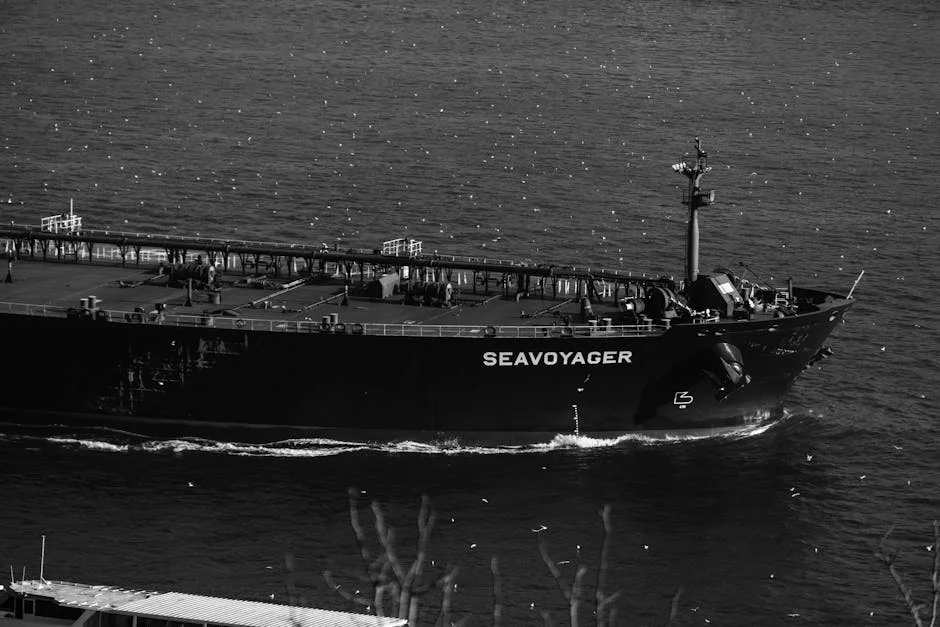
Iran has called for the establishment of transit fees for ships passing through the Strait of Hormuz, citing the model used by Egypt's Suez Canal. This demand comes amid rising regional tensions and the essential role of the Strait, through which around 20% of the world's oil passes. Unlike the Suez, the Hormuz Strait currently has no formal fee structure, raising questions about economic fairness and maritime governance.
The Suez Canal Model
The Suez Canal Authority (SCA) charges a fee based on the size and type of vessel. In 2022, the SCA announced a price increase of 6% for transit fees, securing approximately $8 billion in toll revenue. This revenue supports Egypt’s economy and contributes to infrastructure development and maintenance, producing a stable income stream that benefits the country.
Egypt's Suez Canal is not just a significant trade route; it underscores how strategic locations can monetise global shipping traffic. The effectiveness of this model raises questions for Iran regarding the Strait of Hormuz. With an estimated 17 million barrels of oil traversing this strait daily, imposing fees could potentially benefit Iran’s economy.
Iran's Position on Transit Fees
Iran's oil exports have faced significant disruption due to international sanctions, with the US pressuring countries to limit purchases of Iranian oil. Ali Akbar Khaji, Iran's Deputy Foreign Minister, recently suggested that charging transit fees could strengthen Iran's economy while also addressing issues related to maritime security in the region.
Implementing fees in Hormuz would not only bring in revenue for Iran but also allow for improved maritime safety measures. This could enhance the security of vessels passing through the strait, reducing the risk of conflicts and ensuring a more stable shipping environment.
Challenges of Implementation
However, implementing a fee system in Hormuz comes with challenges. The international community may view such a move as an escalation of tensions in an already volatile region. Additionally, there are concerns that imposing fees could disrupt oil markets and lead to increased shipping costs passed on to consumers globally.
Another obstacle is the lack of a formal governing body to oversee such fees, akin to the SCA for the Suez Canal. An international consensus would be necessary to establish and enforce a fee structure in Hormuz, which could be difficult to achieve given the divergent interests of regional and global powers.
Implications for African Development
For African development, the implications of Iran's transit fee propositions extend beyond just economic considerations. Many African nations, including Nigeria, depend heavily on oil imports, much of which passes through the Strait of Hormuz. An increase in fees could lead to higher fuel prices across the continent, impacting economic growth.
Moreover, any instability in the Strait can have repercussions for the African economy. Countries not only depend on oil but also on the security of shipping lanes to facilitate trade with Europe and Asia. Thus, the relationship between Iran's decisions regarding Hormuz and African development goals is more interconnected than it may seem.
Future Prospects and Considerations
As discussions around transit fees in Hormuz gain traction, stakeholders in Africa should closely monitor the situation. The potential for increased shipping costs could influence energy prices, which in turn affects economic stability in oil-dependent nations like Nigeria.
In the coming months, the international community will be watching to see how Iran's proposals are received by other nations and whether any agreements can be reached to formalise a fee structure in the Strait of Hormuz. Understanding these dynamics will be crucial for African nations as they navigate their own developmental strategies.
See Also
- Nigerians Flee South Africa as Xenophobia Flares
- Wizkid Shatters 11 Billion Spotify Records for Africa
What is the latest news about iran demands fair transit fees for hormuz like egypts suez canal?
Why does this matter for environment-nature?
What are the key facts about iran demands fair transit fees for hormuz like egypts suez canal?