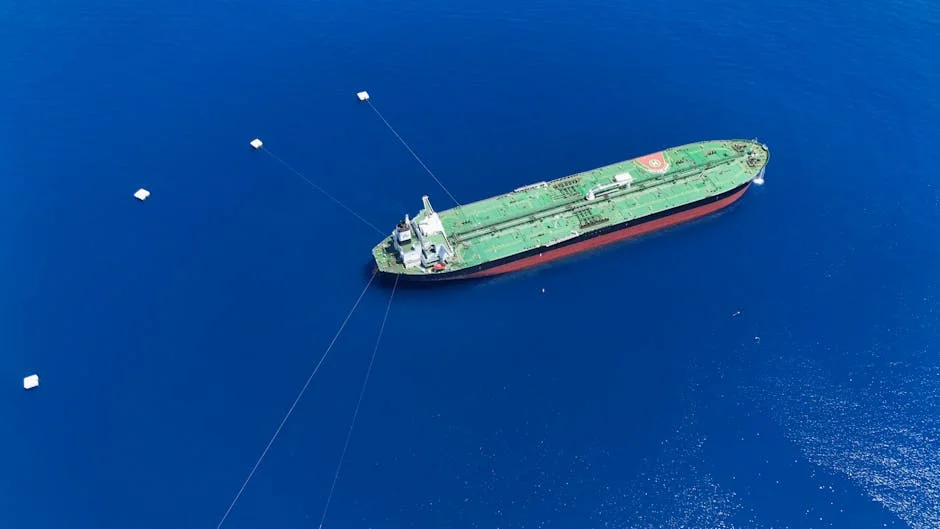
UK Prime Minister Keir Starmer has called for renewed efforts to ensure a lasting US-Iran ceasefire, highlighting the fragile state of regional security in the Strait of Hormuz. The strategic waterway, a critical artery for global oil trade, has seen rising tensions following recent diplomatic setbacks. Starmer’s remarks come as Nigeria, a major oil importer, faces potential disruptions in energy supply and economic stability.
Strategic Importance of the Strait of Hormuz
The Strait of Hormuz, located between Iran and the United Arab Emirates, is one of the world’s most vital shipping lanes. Over 20% of global oil shipments pass through the narrow strait, making it a focal point for geopolitical tensions. Recent clashes between US and Iranian-backed groups have raised concerns about potential disruptions to global trade, particularly for countries like Nigeria, which rely heavily on imported fuel.
Starmer’s comments underscore the need for diplomatic engagement to prevent escalation. “There is much work to be done to ensure the ceasefire holds,” he said during a recent press briefing. “The international community must remain vigilant to avoid a crisis that could have far-reaching consequences.” The UK has been actively involved in multilateral talks, aiming to de-escalate tensions and secure a sustainable peace.
Nigeria’s Energy Vulnerability
Nigeria, Africa’s largest oil producer, is paradoxically one of the continent’s most energy-dependent nations. Over 70% of the country’s fuel is imported, with the majority sourced from the Middle East. Any disruption in the Strait of Hormuz could lead to a sharp rise in fuel prices, exacerbating inflation and economic instability. In 2023, Nigeria’s fuel import bill reached $6.2 billion, according to the International Energy Agency.
Analysts warn that the situation in the Strait of Hormuz could have a ripple effect on African economies. “The region’s energy security is closely tied to global supply chains,” said Dr. Adebayo Adeyemi, an energy economist at the University of Lagos. “Any instability in the Middle East risks pushing fuel prices higher, impacting everything from transportation to food production.”
Regional Impacts and Economic Risks
The ripple effects of Hormuz tensions extend beyond energy. Countries like Ghana, Kenya, and South Africa, which also depend on oil imports, could face similar challenges. For example, in 2022, a 15% spike in global oil prices led to a 3% contraction in Kenya’s GDP. Such scenarios highlight the need for regional coordination to mitigate the economic fallout of geopolitical conflicts.
Additionally, the instability in the Middle East could disrupt global trade routes, affecting African exports. The continent’s growing integration into global markets relies on stable shipping lanes. A prolonged crisis in the Strait of Hormuz could delay shipments, increase costs, and reduce competitiveness for African businesses.
Diplomatic Efforts and Regional Cooperation
In response to the growing risks, African leaders have called for greater regional cooperation. The African Union (AU) has urged member states to strengthen energy diversification and invest in renewable sources to reduce dependence on volatile global markets. “Africa must take control of its energy future,” said AU Commissioner for Infrastructure and Energy, Amani Abou-Zeid.
Regional bodies like the East African Community (EAC) and the Southern African Development Community (SADC) are also exploring ways to enhance energy security. Initiatives such as the East African Crude Oil Pipeline (EACOP) and cross-border electricity projects are being accelerated to reduce reliance on external sources.
Looking Ahead: What to Watch
As the situation in the Strait of Hormuz remains unpredictable, the focus will shift to diplomatic efforts and regional strategies. The next AU summit, scheduled for July 2025, will be a key moment for African leaders to discuss energy resilience and economic diversification. Meanwhile, Nigeria’s government has pledged to increase domestic refining capacity, with a target of boosting output by 40% by 2026.
For now, the international community must remain attentive to developments in the region. The stability of the Strait of Hormuz is not just a Middle East issue—it is a global concern with profound implications for Africa’s development trajectory.
Countries like Ghana, Kenya, and South Africa, which also depend on oil imports, could face similar challenges. Such scenarios highlight the need for regional coordination to mitigate the economic fallout of geopolitical conflicts.