A video showing a baboon methodically opening a car door in South Africa has racked up millions of views on TikTok, thrusting a longstanding conservation challenge into the spotlight of global social media. The clip, filmed in Cape Town's southern suburbs, shows the primate working the door handle with surprising dexterity before sliding inside. Experts say the incident reflects a growing collision between urban expansion and wildlife corridors across the continent.
The Viral Moment
The footage emerged on social media platforms late last week, quickly spreading beyond South Africa's borders. Within 48 hours, the video had gathered more than 3.2 million views across multiple accounts. The baboon, identified by local wildlife monitors as a male from one of the area's baboon troops, appeared unhurried as it tested the vehicle's door mechanism. Witnesses at the scene confirmed the primate spent several minutes investigating the car before departing with nothing taken.
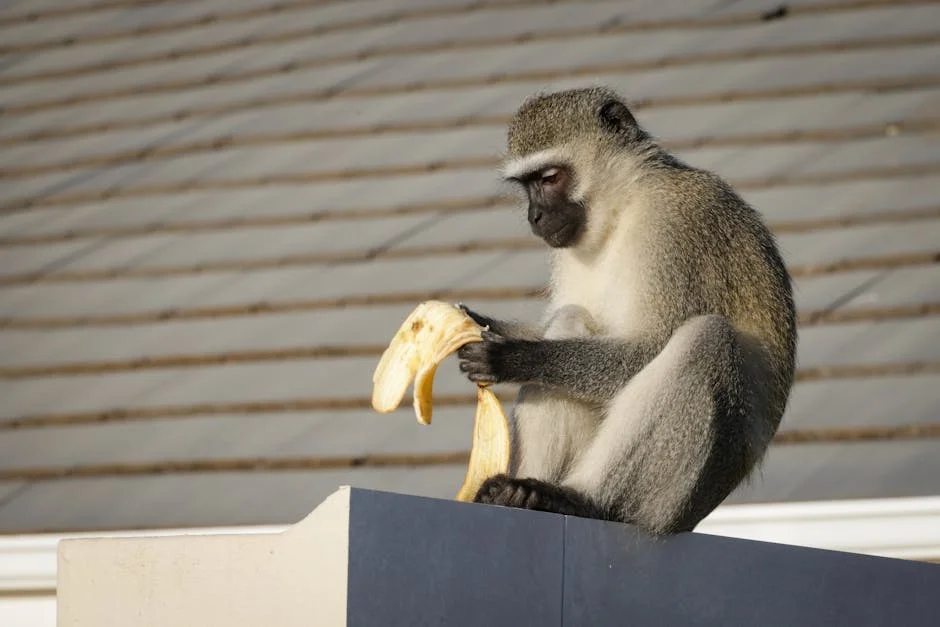
Local resident Thabo Molefe captured the video on his phone. "I was sitting on my porch when I noticed the baboon approaching the parked car," Molefe told local media. "I started recording because I knew nobody would believe me otherwise." The footage shows the animal using both hands to manipulate the door handle, a behaviour that has surprised even seasoned wildlife experts.
Urban Wildlife Tensions in Cape Town
Cape Town has long grappled with baboon management programmes. The city's urban fringe sits adjacent to mountain slopes and nature reserves where baboon troops have lived for generations. As residential development pushes further into these areas, encounters between humans and primates have increased substantially. The South African National Biodiversity Institute reports that Cape Town's baboon population numbers roughly 30 troops, with many increasingly venturing into suburban neighbourhoods in search of food.
Dr. Fiona Adams, a primatologist at the University of Cape Town, noted that baboons are highly intelligent creatures capable of learning complex behaviours. "What we are seeing is not random curiosity," Adams explained. "These animals observe human behaviour, learn door mechanisms, and share that knowledge within their social groups." This social learning component means that once one baboon masters a technique, others in the troop quickly follow.
Food Scarcity Drives Urban Incursions
Wildlife authorities point to shrinking natural food sources as the primary driver behind such encounters. Drought conditions across parts of the Western Cape have reduced fruit and seed availability in natural habitats. Baboons consequently spend more time foraging in urban areas where they encounter unsecured rubbish bins, fruit trees, and vehicles containing food items. The Cape Town City Council has implemented various measures to address waste management, but enforcement remains inconsistent across different neighbourhoods.
The South African baboon population faces additional pressures from habitat fragmentation. Road networks, housing developments, and agricultural land have increasingly divided their traditional ranges. Conservation groups warn that isolated baboon troops face higher stress levels and greater dependence on human food sources. The situation presents a difficult balancing act between protecting wildlife and maintaining quality of life for urban residents.
Tourism and Local Economy
South Africa's wildlife tourism sector contributes significantly to the national economy, with visitors drawn by the opportunity to see species like baboons in natural settings. However, negative encounters between tourists and wildlife can damage the country's reputation as a responsible tourism destination. Industry representatives stress that sustainable wildlife management practices directly impact the sector's long-term viability. Cape Town alone attracts millions of tourists annually, many of whom specifically seek wildlife viewing opportunities.
Community Response and Adaptation
Residents in affected areas have adopted varying strategies to deter baboons. Some households have invested in specialised wildlife-proof bins, while others have installed motion-activated alarms. Community watchdog groups have formed to share information about baboon movements and coordinate responses. The effectiveness of these measures varies considerably depending on location and resources available.
Local councillor Sarah van der Berg acknowledged the challenges facing communities. "People want to live near nature, but they also want their cars and homes to remain undisturbed," she said. "We need better education for new residents about living alongside wildlife." The city has rolled out awareness campaigns, though critics argue these efforts remain insufficient given the scale of the problem.
Conservation Management Strategies
The Western Cape Baboon Programme currently monitors 11 baboon troops across the greater Cape Town area. Programme officers use various non-lethal techniques to discourage baboons from entering urban zones, including noise deterrents and targeted removal of problem individuals. However, the programme operates with limited funding, constraining its ability to expand coverage. Private landowners and homeowner associations increasingly bear responsibility for managing baboon interactions on their properties.
Critics argue that a more comprehensive regional strategy is needed. Dr. Adams and other researchers have called for improved land-use planning that preserves wildlife corridors connecting natural habitats. Without such corridors, baboon troops become trapped in increasingly urbanised landscapes, exacerbating human-wildlife conflict. The challenge lies in implementing such measures across multiple municipal boundaries and private land holdings.
What Comes Next
Wildlife managers in South Africa say the viral video has sparked renewed public interest in urban wildlife management issues. The Cape Town City Council is scheduled to review its baboon management strategy in the coming months, with officials promising broader public consultation. Conservation groups plan to use the heightened attention to push for increased funding and more integrated planning approaches.
Residents and authorities alike will be watching closely to see whether the moment of viral fame translates into meaningful action. For now, the baboon that briefly became an internet sensation has returned to its troop, leaving behind questions about how South African cities will balance urban growth with wildlife conservation. Experts warn that without systemic changes, similar incidents will continue making their way onto social media feeds worldwide.
See Also
- US Cuts Intelligence Sharing With Korea Over North Korean Site Remarks
- Festival Internacional Returns to Gaia with Cultural Boost
Industry representatives stress that sustainable wildlife management practices directly impact the sector's long-term viability. "We need better education for new residents about living alongside wildlife." The city has rolled out awareness campaigns, though critics argue these efforts remain insufficient given the scale of the problem.Conservation Management StrategiesThe Western Cape Baboon Programme currently monitors 11 baboon troops across the greater Cape Town area.