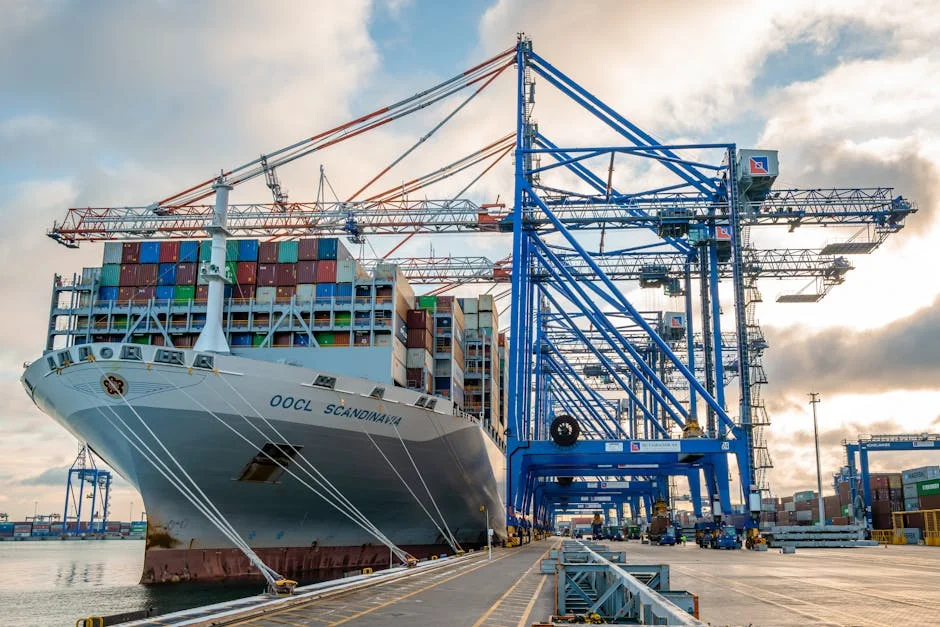
President Bola Tinubu declared the effective elimination of piracy in Nigerian territorial waters during a keynote address at the Africa Summit. This bold assertion marks a turning point for the Gulf of Guinea, a region that has long been the epicenter of maritime insecurity on the continent. The announcement signals a potential reset for regional trade and investment flows.
A Historic Claim for Maritime Security
The President’s statement carries weight given the historical volatility of the Nigerian coastline. For years, the Gulf of Guinea has been labeled the world’s most dangerous stretch of sea for commercial shipping. Attacks on vessels, ranging from hijackings to simple robberies, have cost insurers and traders billions of dollars annually. Tinubu’s declaration suggests that coordinated military and diplomatic efforts have finally yielded tangible results.

Observers note that this is not merely a domestic victory but a continental milestone. The stability of Nigerian waters directly impacts the broader West African Economic and Monetary Union and the Economic Community of West African States. If Nigeria, the demographic giant of Africa, can secure its maritime domain, it sets a powerful precedent for other coastal nations facing similar logistical nightmares.
The timing of the announcement at the Africa Summit is strategic. It places maritime security at the forefront of the pan-African development agenda. By highlighting this achievement, the Nigerian leadership is positioning itself as a key driver of stability in a region often plagued by political and economic uncertainty. This move aims to attract foreign direct investment into the port infrastructure and logistics sectors.
The Economic Stakes for African Trade
The economic implications of a piracy-free zone are profound for African development goals. Secure waters mean lower insurance premiums for shipping companies, which translates to cheaper imports and exports for the entire continent. This cost reduction can stimulate intra-African trade, a core objective of the African Continental Free Trade Area. Reduced logistical costs make African goods more competitive in global markets.
Impact on Regional Port Efficiency
Port congestion in Lagos and Onitsha has long been a bottleneck for Nigerian commerce. With fewer vessels idling in anchorage waiting for security clearances, throughput at the Apapa and Tin Can Island ports is expected to improve significantly. This efficiency gain reduces the time goods spend in transit, thereby lowering the cost of basic commodities for Nigerian consumers. Faster clearance times also mean that perishable goods, a major export for West Africa, reach international markets in better condition.
Furthermore, the stability encourages the revival of the Nigerian maritime industry. Local shipbuilding and repair sectors, which suffered during the peak of piracy, are seeing renewed interest from investors. This industrial growth creates jobs and reduces the country’s reliance on imported maritime services. The ripple effects extend to related industries such as fuel supply, crewing, and marine engineering.
Challenges to Sustaining the Gain
Despite the optimistic declaration, sustaining this security requires continuous effort and investment. The Nigerian Navy and the Agency for Maritime Administration and Zone have worked tirelessly to patrol the waters. However, maintaining this vigilance demands robust funding and modern equipment. The challenge lies in ensuring that the security apparatus does not suffer from budgetary cuts or political neglect in the coming years.
Regional cooperation remains another critical factor. Piracy is rarely a solitary crime; it often involves cross-border networks of financiers, fishermen, and armed gangs. Nigeria’s success depends on its ability to share intelligence and coordinate operations with neighbors like Benin, Ghana, and Cameroon. Without a unified front, pirates could simply shift their bases to less monitored areas along the coast.
Additionally, the root causes of piracy, such as unemployment and poverty in coastal communities, must be addressed. Security measures alone are temporary fixes if the local economy does not improve. Integrating coastal livelihood programs with naval patrols can help reduce the influx of new recruits into the pirate ranks. This holistic approach ensures that security gains are backed by social stability.
Implications for Continental Development Goals
This development aligns closely with the African Union’s Agenda 2063, which emphasizes a peaceful and secure Africa. Maritime security is a foundational element of this vision. A stable Gulf of Guinea facilitates the movement of people and goods, fostering economic integration. It also enhances the continent’s strategic leverage in global trade negotiations, particularly regarding the Suez Canal and the emerging Red Sea routes.
The announcement also boosts investor confidence in the broader West African region. International corporations have long viewed the Gulf of Guinea as a high-risk zone. A verified reduction in piracy lowers the risk premium associated with investing in Nigeria and its neighbors. This can lead to an influx of capital into infrastructure projects, energy sectors, and manufacturing hubs.
From a governance perspective, the achievement demonstrates the effectiveness of targeted policy interventions. It shows that focused leadership and strategic resource allocation can yield quick wins in complex security environments. This model can be replicated in other sectors, such as health and education, where coordinated efforts are needed to drive development outcomes.
Regional Cooperation and Future Steps
The success in Nigerian waters offers a blueprint for other African coastal nations. Countries like Tanzania, Mozambique, and South Africa face their own maritime challenges, including the recent surge in piracy off the Horn of Africa. Sharing best practices and intelligence with Nigeria can help these nations replicate the security model. Regional bodies like the Cotonou Agreement mechanism can be strengthened to formalize these collaborations.
Looking ahead, the focus must shift from mere elimination to sustainable management. This involves investing in port infrastructure to handle increased traffic and developing a robust legal framework for prosecuting maritime crimes. Strengthening the judicial process ensures that captured pirates face swift justice, which acts as a deterrent to future offenders. It also involves enhancing the capacity of the Coast Guard to handle non-military maritime issues.
International partners will likely increase their engagement in the region. The European Union, the United States, and China have all shown interest in securing the Gulf of Guinea. Nigeria must leverage this interest to secure long-term commitments for infrastructure and technology transfers. These partnerships can help modernize the Nigerian maritime sector and integrate it more deeply into the global supply chain.
What to Watch Next
The coming months will be crucial in verifying the sustainability of this claim. Investors and insurers will be watching closely for any resurgence in attacks or delays in ship movements. The Nigerian government will need to release regular statistical data to maintain transparency and confidence. Regular updates from the Nigerian Maritime Administration and Safety Agency will be key indicators of progress.
Readers should monitor the upcoming regional summits where maritime security is likely to be a dominant theme. Decisions made there will determine the level of financial and political support Nigeria receives for its maritime initiatives. Additionally, watch for announcements regarding new port infrastructure projects in Lagos and Port Harcourt, which will signal long-term confidence in the region’s stability. The next quarter’s shipping insurance rates will serve as a real-time barometer of the security situation in the Gulf of Guinea.
See Also
- Nigeria Promises Power Reform as Outages Spark Public Outrage
- Kenya Police Shake Up Ruto's Security Detail After Security Breach
Regular updates from the Nigerian Maritime Administration and Safety Agency will be key indicators of progress. It also enhances the continent’s strategic leverage in global trade negotiations, particularly regarding the Suez Canal and the emerging Red Sea routes.
What is the latest news about tinubu declares nigerian waters piracyfree at africa summit?
Why does this matter for politics-governance?
What are the key facts about tinubu declares nigerian waters piracyfree at africa summit?