When Oleksandr Usyk climbed into the ring in Riyadh on the night of May 18, 2024, and stopped Tyson Fury in the ninth round to become the undisputed heavyweight champion of the world, the reverberations were felt from Kyiv to Kinshasa. For Africa — a continent with a deep and passionate relationship with boxing — the Usyk era has carried a particular resonance, because Ukrainian boxing and African boxing are more closely intertwined than most casual observers realise. Champions, trainers, promoters and millions of fans across sub-Saharan Africa have watched with admiration as Ukrainian fighters have consistently dominated world rankings, and that admiration is reciprocated in the pages and broadcasts of Ukrainian sports media.
This article explores that remarkable cross-continental relationship: how African boxers have shaped Ukrainian boxing, how Ukrainian champions have come to command respect across Africa, and what the broader cultural and sporting bridge between Ukraine and the African continent looks like in the modern era.
Usyk's Road to the Undisputed Title and Its African Echoes
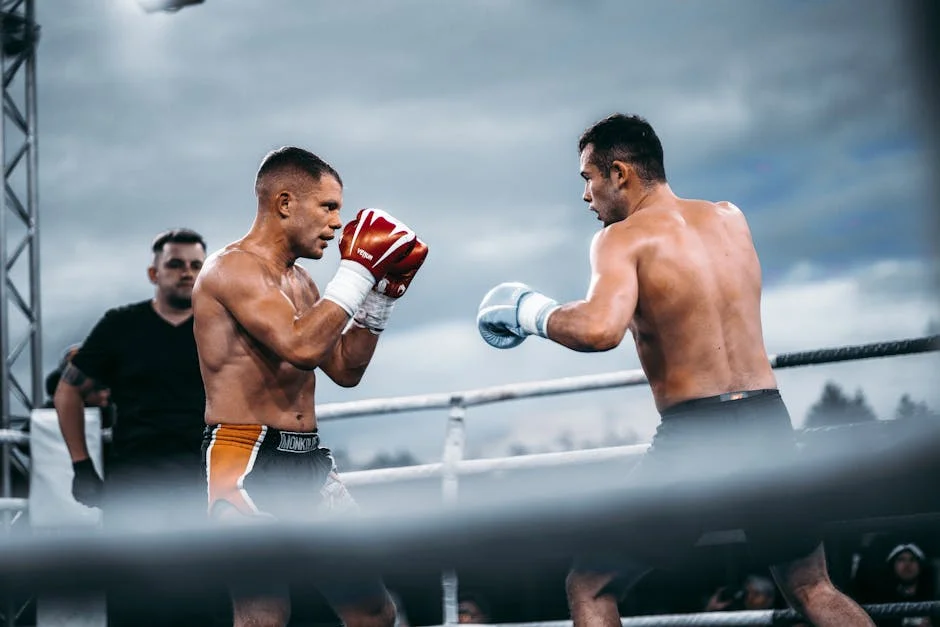
Oleksandr Usyk's journey to undisputed heavyweight champion was one of boxing's most extraordinary narratives of the past decade. Beginning as an amateur standout who won the World Amateur Boxing Championship and Olympic gold at London 2012, Usyk turned professional and blazed through the cruiserweight division, unifying all four major belts before moving up to heavyweight. Along that road, he faced several opponents with African connections, and the fights were each studies in contrasting boxing philosophies.
His 2021 defeat of Anthony Joshua — a fighter of Nigerian heritage who represents, to millions across Africa, a symbol of Pan-African sporting pride — was watched in living rooms and sports bars from Lagos to Nairobi. The reaction was, predictably, mixed. Many African fans were disappointed to see Joshua lose. Yet the manner of Usyk's victory — supremely technical, patient, and devastating — earned widespread respect. African boxing commentators noted that Usyk's style bore the hallmarks of the Eastern European amateur tradition: footwork, angles, and a chess-like approach to distance management.
When the rematch took place in Jeddah in August 2022, with Ukraine already at war, Usyk again prevailed. He dedicated the victory to his country. That gesture — a champion dedicating a world title to a nation under siege — resonated in Africa, where so many countries have their own histories of conflict, resilience, and the symbolic power of sporting achievement. For many African fans, the Ukrainian champion became something more than a boxer. He became a figure of defiance.
African Boxers on the World Stage: Where Ukraine Fits
To understand the Usyk-Africa connection fully, one must first appreciate the depth of African boxing talent and how it sits within global rankings — and in relation to Ukrainian fighters specifically.
Nigeria's Boxing Heritage
Nigeria has produced world champions in multiple weight classes over the decades. Dick Tiger, one of the greatest middleweights in history, is still spoken of with reverence. In the modern era, Nigeria's boxing scene has faced structural challenges — a lack of consistent funding, infrastructure deficits at the grassroots level, and the perennial problem of talented young fighters emigrating to find better training facilities. Yet the talent pipeline remains strong.
Several Nigerian-born or Nigerian-heritage fighters have crossed paths with Ukrainian opponents at various levels. At the regional and international amateur level, Nigerian boxers regularly appear at World Series Boxing and AIBA-sanctioned events where Ukrainian opponents are frequent. The technical disparity can be stark — Ukrainian amateurs typically benefit from decades of Soviet-era infrastructure that was preserved and modernised after independence — but Nigerian fighters often compensate with natural athleticism and raw power.
Cameroon's Contribution
Cameroon has quietly built one of Central Africa's more consistent boxing programs. The country's fighters tend to excel in the lighter weight classes, and several have competed in European circuits where Ukrainian opponents are not uncommon. Cameroonian boxing officials have, in recent years, expressed interest in formalising training partnerships with Eastern European federations — a sign of the growing awareness in Africa that the Ukrainian amateur model produces results.
Cameroonian heavyweight Parfait Dabla, though less globally known, represented the kind of rugged, determined fighter who has occasionally been matched against Eastern European prospects in European promotions. These bouts, while not main events, are part of the connective tissue of global boxing — the thousands of non-title fights that slowly build the relationships between boxing communities.
South Africa and the Heavyweight Picture
South Africa, historically Africa's most developed boxing market, has produced champions across multiple eras. In the modern heavyweight picture, South African promoters have been keen to attach their fighters to the global heavyweight boom that Usyk and Joshua represent. South African fans are sophisticated boxing consumers — they follow global rankings, understand the sanctioning body landscape, and debate the technical merits of fights with genuine knowledge.
The question of a Usyk fight involving an African opponent was discussed seriously in the aftermath of the Joshua rematches. While it never materialised at the top level during the cruiserweight years, the prospect remains a conversation in African boxing circles.
WBC and WBA Title Fights: The Sanctioning Body Landscape
The alphabet soup of boxing's sanctioning bodies — WBC, WBA, IBF, WBO — creates a complex web of mandatory challengers, rankings, and title fights. Ukrainian fighters have, over the past two decades, accumulated an extraordinary number of belt holders within this system.
- Oleksandr Usyk — Undisputed heavyweight champion (WBC, WBA, IBF, WBO)
- Vasiliy Lomachenko — Former unified lightweight champion, considered pound-for-pound one of the best
- Oleksandr Gvozdyk — Former WBC light heavyweight champion
- Viktor Postol — Former WBC junior welterweight champion
- Denys Berinchyk — WBO lightweight champion
This concentration of title holders from a single nation is remarkable and reflects the strength of Ukrainian boxing infrastructure. For African nations whose fighters are ranked in these divisions, the path to a world title often runs through a Ukrainian opponent. The mandatory challenger system means that African boxers who climb high enough in the rankings will, almost inevitably, face a Ukrainian at some point.
Sena Agbeko of Ghana, a former IBF bantamweight champion, represents the kind of African champion who competed at world level and experienced both the heights and hardships of international boxing. While he did not fight Ukrainians at championship level, his career arc — African champion, global stage, European-circuit opposition — is a template that many African fighters follow.
Boxing as a Bridge Sport Between Continents
What makes boxing uniquely suited to bridging the Ukraine-Africa sporting relationship is its universality. Unlike team sports with expensive infrastructure requirements, boxing needs only a ring, gloves, and dedication. This democratic accessibility means that boxing has thrived in both Ukraine and across sub-Saharan Africa despite vastly different economic and political circumstances.
Both regions share a boxing culture that values technical excellence fused with heart. The Soviet-Ukrainian tradition emphasised the former; the African tradition, particularly in West and East Africa, has often combined technical skill with a combative spirit born of adversity. When these approaches meet in the ring, the results are invariably compelling.
Promoters in both regions have increasingly understood the commercial logic of cross-continental matchmaking. A Ukrainian heavyweight against a Nigerian challenger would generate enormous interest on both sides. The television market across Africa for major boxing events has grown substantially, driven by increased smartphone penetration and streaming access. Ukrainian fighters, who command global audiences, would bring that audience to African screens in a way that few other matchups could.
How Ukrainian Sports Media Covers African Athletics
One of the less-discussed aspects of the Ukraine-Africa sporting relationship is how Ukrainian sports journalists and media platforms engage with African athletics. The coverage is more substantial than many would expect. Ukrainian sports fans are knowledgeable about global boxing, and any major African champion — whether in boxing, athletics, or football — receives meaningful coverage in Ukrainian sports outlets.
Portals like Sport.d.ua provide Ukrainian-language coverage of international sporting events including those involving African athletes. When a Kenyan runner breaks a world record, when a Nigerian-heritage fighter wins a European belt, or when African nations perform at the Olympics, Ukrainian sports readers have access to comprehensive reporting. This coverage reflects a genuine engagement with global sport, not a parochial focus solely on domestic events.
The coverage of Usyk's fights against Joshua — where Joshua's Nigerian heritage was consistently noted and contextualised — showed that Ukrainian sports journalism treats African sports culture with seriousness and respect. The Nigerian community's pride in Joshua, his background, and his meaning to the diaspora was covered with nuance in Ukrainian sports outlets, even as they naturally hoped for a Usyk victory.
The Amateur Pipeline: Where the Future Champions Are Made
Perhaps the most important structural element of the Ukraine-Africa boxing connection is at the amateur level, which remains the primary feeder system for world-class professionals in both regions.
AIBA and International Competition
At the World Amateur Boxing Championships and the Olympic qualifying tournaments, Ukrainian and African boxers regularly compete. The quality of these matchups has improved dramatically as African nations — particularly Ghana, Nigeria, Morocco, and Algeria — have invested in their amateur programs.
Algeria, worth noting, has produced some of Africa's most successful amateur boxers and consistently challenges at the Olympic level. Algerian fighters have faced Ukrainians in Olympic and World Championship bouts, with each fight adding another thread to the cross-continental tapestry.
Training Partnerships and Knowledge Transfer
There is growing interest in formalising training partnerships between Ukrainian boxing clubs and African federations. Several Ukrainian coaches — whose knowledge of the Soviet-era methodological tradition is unmatched — have worked in Africa. The transfer of training knowledge, conditioning methods, and tactical approaches represents a genuine form of sporting diplomacy that receives less attention than it deserves.
- Periodisation training models developed in Soviet-era Ukraine have been adapted for use in African amateur programs
- Ukrainian sparring partners have been sought by African professional camps preparing for world-level fights
- African fighters training in European gym networks frequently encounter Ukrainian coaches and training partners
The Cultural Dimension: Africa's Response to Ukraine's Wartime Boxing
Since the Russian invasion of Ukraine in February 2022, a remarkable thing has happened in the global boxing conversation: Ukrainian fighters have become symbols not just of sporting excellence but of national resilience. Usyk fighting with the Ukrainian flag, dedicating wins to his country, wearing military camouflage to press conferences — these images have circled the globe.
In Africa, where the relationship with conflict, post-colonial struggle, and national identity is deeply personal and complex, these images have landed with particular power. Many African countries have their own histories of fighting for sovereignty and self-determination. The image of a boxer — a physical embodiment of individual strength — standing for his nation in its hour of need is a resonant one across the continent.
Social media discussions in Nigerian, Ghanaian, Kenyan and South African communities during Usyk's fights have shown genuine emotional investment beyond mere sporting interest. He was cheered not just as a champion but as a man standing up for something. That emotional connection is the foundation upon which a deeper Ukraine-Africa sporting relationship can be built.
The Commercial Opportunity: Africa as a Boxing Market
The African boxing market is one of the most underdeveloped in terms of commercial potential relative to talent base. Pay-per-view penetration remains low compared to North America or the UK, but free-to-air and streaming numbers are growing. A Usyk fight promoted with serious investment into African markets — African commentary teams, African media partnerships, African-based press conferences — could tap into an audience of hundreds of millions.
The economic case for deeper Ukraine-Africa boxing engagement is strong:
- Nigeria alone has over 200 million people with a passionate sports culture
- The growing African middle class is increasingly willing to pay for premium sports content
- African diaspora communities in Europe and North America represent additional marketing targets
- African-origin champions fighting Ukrainian opposition would generate organic cross-continental interest
Looking Ahead: The Next Generation
The future of the Ukraine-Africa boxing relationship will be written by the next generation of fighters currently working their way through amateur programs and lower-level professional cards. In gyms in Lagos, Accra, Nairobi, and Kinshasa, young boxers are training with world titles in mind. Some of them will eventually face Ukrainian opponents. A few may become champions. And when those fights happen, the connection between these two boxing cultures will deepen further.
Ukrainian boxing is in a transitional moment. Usyk's era as the undisputed champion will eventually give way to new champions. But the infrastructure that produced Usyk, Lomachenko, and the generation of Ukrainian world champions before them remains intact. The tradition will continue producing elite fighters.
For Africa, the opportunity is to use the inspiration of the Usyk era — the proof that excellence, technique, and dedication can overcome all obstacles — as fuel for developing the next generation of African world champions. The blueprint exists. The talent exists. What is needed is investment, structure, and the kind of sustained commitment that Ukrainian boxing has demonstrated over decades.
Conclusion: More Than Just Boxing
The connection between African boxing and Ukrainian boxing transcends the sport itself. It is a connection built on shared values — resilience, pride, the pursuit of excellence against difficult odds — and on the universal language of physical competition at the highest level.
Oleksandr Usyk defeating Tyson Fury, and before him Anthony Joshua, to become undisputed heavyweight champion of the world was not just a Ukrainian story. It was a story about what is possible when talent meets preparation meets determination. African boxing communities, with their extraordinary depth of talent and their hunger for world-level success, heard that story and recognised something of themselves in it.
As the relationship between Ukrainian and African boxing continues to develop — through shared competition, coaching exchanges, and the growing appetite of African fans for world-class boxing content — both communities stand to benefit. The ring, after all, is the great equaliser. And when Ukrainian and African fighters meet in it, the result is a testament to the global reach and human power of the sweet science.