Lead paragraph: On a recent Friday, Palestinians gathered at a checkpoint in the West Bank, hoping to enter Jerusalem for Ramadan prayers at the Al-Aqsa Mosque. This situation highlights ongoing tensions and restrictions faced by Palestinians, raising questions about governance and economic conditions in the region.
Context and Background
The West Bank, officially known as the Palestinian territories, has been a focal point of the Israeli-Palestinian conflict for decades. Following the 1967 Six-Day War, Israel occupied the West Bank and has since established numerous military checkpoints, which restrict the movement of Palestinians. These checkpoints are particularly prominent during religious observances, such as Ramadan, when many Palestinians attempt to access Jerusalem's holy sites. The dynamics within this region are crucial to understanding broader issues related to governance, economic growth, and human rights.
Key Developments
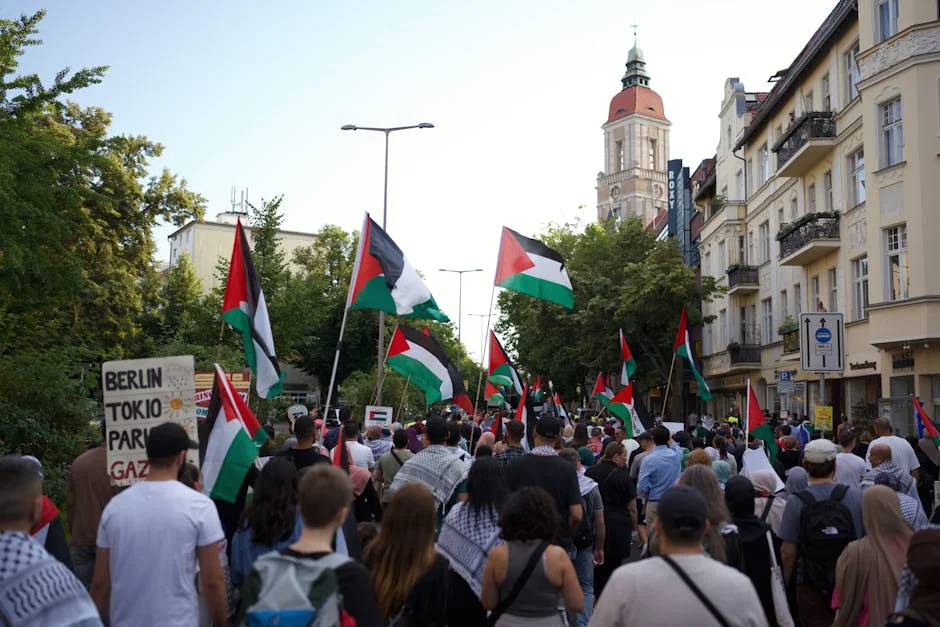
On a recent Friday, thousands of Palestinians made their way to a checkpoint in the West Bank, eager to attend prayers at the revered Al-Aqsa Mosque, a key site in Islam. However, many encountered significant delays as Israeli security forces implemented stringent checks. Reports indicate that the checkpoint was overwhelmed, leading to frustrations among worshippers and raising concerns about the accessibility of religious observances.
Details and Evidence
According to local sources, the checkpoint saw long queues as Palestinians were subjected to security screenings. Witnesses reported that many were turned back despite having permits, citing security concerns as the reason. The situation was exacerbated by the high number of pilgrims expected during Ramadan, a month of fasting and reflection for Muslims. Statistics reveal that in previous years, the number of Palestinians travelling to Jerusalem for prayers often exceeds 100,000 during Ramadan, underlining the importance of these gatherings.
Analysis: African development and pan-African perspective
This situation is emblematic of broader challenges faced by Palestinians, which resonate with issues prevalent across the African continent. The restrictions on movement and access to essential services reflect governance failures that hinder development. For many African nations, fostering economic growth and ensuring political stability are intertwined with addressing social inequalities. The plight of the Palestinians serves as a poignant reminder of how governance, infrastructure, and health systems can impact a population's ability to thrive, drawing parallels with regions in Africa facing similar struggles.
Impact and Implications
The consequences of these checkpoints extend beyond immediate frustrations. The restrictions exacerbate economic hardships in the West Bank, where unemployment rates remain high and access to resources is limited. As Palestinians encounter barriers to worship and daily life, it raises critical questions about the future of governance in the region and the potential for economic partnerships. Moreover, the implications resonate across Africa, where countries must contend with their own governance issues while striving for development goals.
Outlook
Looking ahead, the situation calls for renewed dialogue on the Palestinian issue, particularly as Ramadan continues. Analysts suggest that addressing the systemic barriers faced by Palestinians could foster greater stability in the region, which, in turn, may have positive effects on governance and economic development. For readers interested in the intersection of the Palestinian plight and African development, this situation warrants close observation as it unfolds, highlighting the ongoing challenges and opportunities for collaborative solutions across the continent.