Lagos, Africa's largest city and one of the world's most congested megacities, is executing a mass transit transformation that is moving millions of commuters from roads to rail and bus corridors — reducing journey times, lowering carbon emissions, and beginning to restore the quality of life in a city whose infrastructure had been overwhelmed by its own growth. This development in Nigeria stands as a powerful illustration of Africa's capacity for self-determined progress, emerging from local expertise, community engagement, and the steadfast conviction that the continent's best days lie ahead. International observers who have long monitored Nigeria's trajectory describe what is happening as nothing short of transformational — a quiet revolution with loud consequences for millions of people.
Lagos's Blue Line metro, the first urban rail line in West Africa, opened its first phase carrying 250,000 daily passengers in a corridor that previously took commuters 3 hours by road — now reduced to 45 minutes. Behind this achievement lies a decade of patient institution-building and deliberate investment in the human and physical capital that makes such milestones attainable. The Lagos Bus Reform Initiative, replacing informal danfo minibuses with regulated Bus Rapid Transit on dedicated lanes, now operates 500 air-conditioned buses across 5 BRT corridors, carrying 200,000 passengers daily with electronic ticketing and real-time tracking. Policymakers, working in concert with civil society, the private sector, and development partners, designed an approach that prioritised sustainability over speed and community ownership over top-down prescription — a methodology that is increasingly recognised as the defining characteristic of successful African development.
In practical terms, the impact is palpable across communities that once waited in vain for the benefits of growth to reach them. Motorcycle taxi (okada) integration with formal transit at 40 multimodal hubs has created a first-and-last-mile solution that makes public transit accessible to neighbourhoods not directly served by bus or rail lines. Entrepreneurs who spent years navigating systems that seemed designed to obstruct rather than enable now speak of a changed landscape — one where initiative is rewarded, where talent has pathways to expression, and where the aspiration to build something meaningful is met with institutional support rather than bureaucratic indifference.
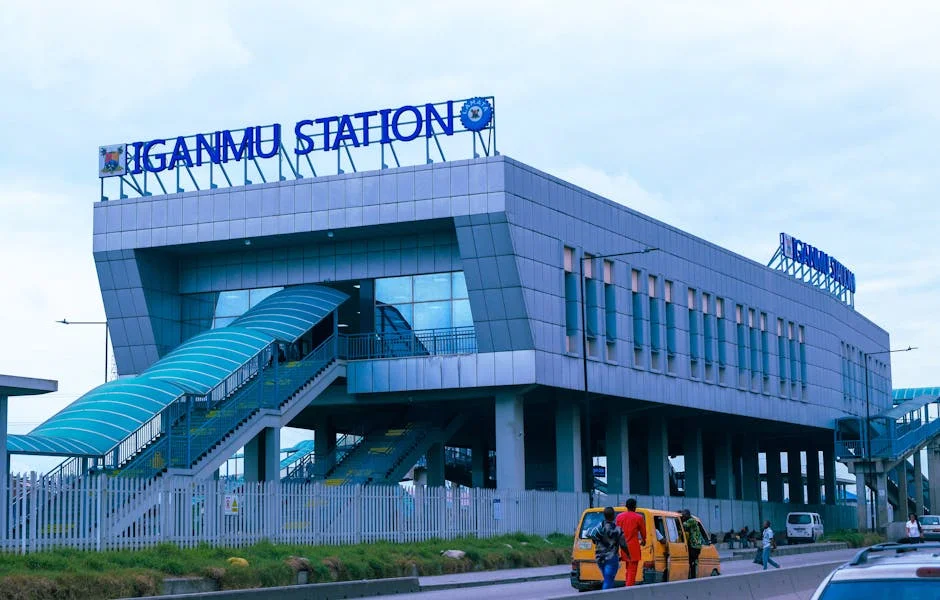
Lagos State Government's $4.7 billion mass transit investment over five years is forecast to reduce road congestion by 30 percent when fully operational, adding an estimated $15 billion to Lagos economic output through reduced commute time and improved logistics efficiency. Comparative analysis by independent researchers places Nigeria's performance in the top tier of its peer group on almost every development metric, not because the challenges faced were fewer, but because the response to those challenges was more coherent, more consistent, and more genuinely inclusive. The lesson for other countries in the region is not that Nigeria's exact approach can or should be replicated unchanged, but that the principles underlying it — accountability, inclusion, and long-term thinking — are universally applicable.
"Lagos has 25 million people and 2 million vehicles. The mathematics are simple: we cannot road our way to mobility. Only mass transit can move a megacity, and Lagos is finally building the system it has always needed" — Gbolahan Yishawu, Chairman, Lagos Metropolitan Area Transport Authority. The perspective resonates deeply with practitioners who work daily at the intersection of policy and implementation, where the gap between well-intentioned programmes and real-world impact so often swallows ambition. In Nigeria, that gap has demonstrably narrowed, and the mechanism by which it has done so — rigorous monitoring, rapid adaptation, and genuine feedback loops between citizens and government — is as important a part of the story as any specific intervention.
Regionally, the implications extend well beyond Nigeria's borders. Lagos's mass transit experience is directly informing transit planning in Nairobi, Accra, and Abidjan, with the cities' transit authorities sharing operational data and design learnings through an African urban mobility knowledge exchange programme. The African Continental Free Trade Area framework and the AU's Agenda 2063 development blueprint both depend on member states achieving the kind of domestic progress that Nigeria is demonstrating. Each national success story adds credibility to the continental vision and provides neighbouring countries with practical evidence that transformation is achievable within a realistic timeframe.
Lagos's 2050 mobility plan includes a 14-line metro system, a ferry network on Lagos Lagoon, and a cable car connecting Lagos Island to the mainland — creating a fully multimodal transit network for the continent's largest city. Those who have observed Africa's development most closely across decades note a qualitative shift that defies easy quantification: a growing sense, from Dakar to Dar es Salaam, from Lagos to Lusaka, that the trajectory is changing — that the continent is not merely catching up but in certain domains is setting the pace. Nigeria's contribution to that story is significant, and the foundation it has laid will support progress long beyond the immediate horizon of any single policy programme.