In Delhi, a 20-year-old cyclist was killed and two others injured after a truck collided with their two-wheeler on March 15, triggering an ongoing investigation into the incident. The accident, which occurred in the capital’s busy urban corridors, highlights persistent challenges in road safety and infrastructure management. While the immediate focus is on the casualties, the event has broader implications for cities across India and, by extension, global urban development discussions.
Urban Infrastructure Challenges in Delhi
Delhi, the capital of India, is a sprawling metropolis with over 30 million residents, where traffic congestion and road safety issues are constant concerns. The March 15 accident underscores the risks faced by commuters, particularly those using two-wheelers, which are a primary mode of transport for millions. Officials have noted that inadequate road design and increasing vehicle density contribute to frequent mishaps. A 2022 report by the National Transport Development Policy Committee found that over 40% of road accidents in Delhi involved two-wheelers, emphasizing the need for targeted infrastructure upgrades.
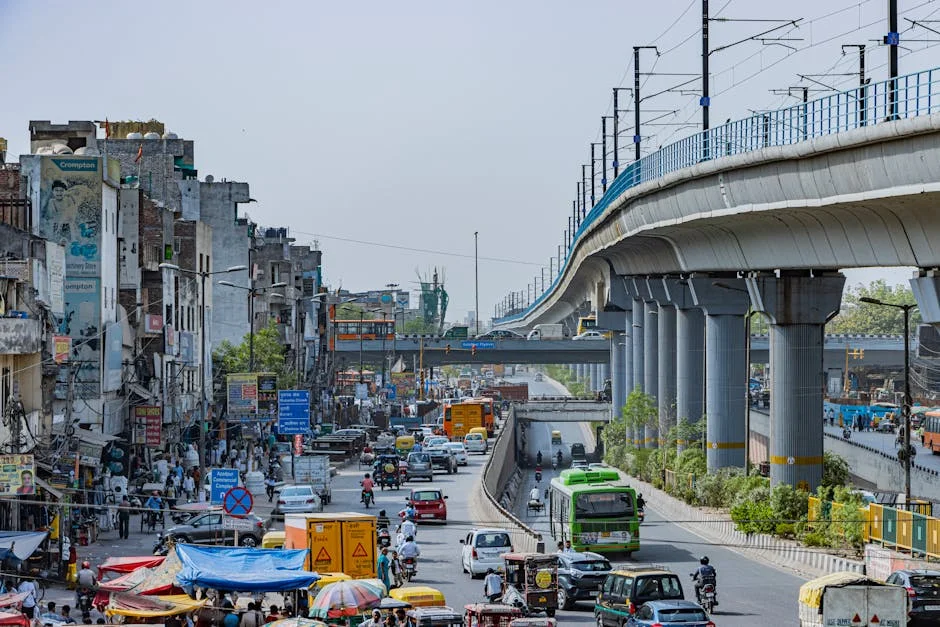
The probe into the incident is examining factors such as speed limits, signage, and driver behavior. Authorities have also pointed to the lack of dedicated lanes for two-wheelers as a key issue. “This is not an isolated case but a systemic problem,” said a senior traffic official. “We must rethink our urban planning to prioritize safer mobility for all.” The findings could influence future policies, potentially setting a precedent for other Indian cities grappling with similar challenges.
Impact on Daily Commuters
For Delhi’s residents, the accident has reignited debates about the reliability of urban transport systems. Two-wheeler users, who form a significant portion of the workforce, often navigate narrow roads without dedicated lanes, increasing their vulnerability. “Every day, I see cyclists and motorbikes squeezed into traffic,” said Ravi Mehta, a daily commuter. “A single mistake can lead to tragedy.” This sentiment reflects a broader frustration among citizens, who argue that infrastructure development has not kept pace with the city’s growth.
The incident also highlights the economic stakes of road safety. A 2021 study by the Indian Institute of Technology Delhi estimated that road accidents cost the city over $2 billion annually in lost productivity and medical expenses. By improving infrastructure, policymakers aim to reduce these costs and enhance the quality of life for millions. The current probe could accelerate such efforts, particularly in areas like New Delhi, where historical traffic patterns and modernization efforts intersect.
Safety Reforms Under Scrutiny
New Delhi, the administrative capital, has been a focal point for safety reforms. Recent initiatives include the expansion of cycle tracks and the introduction of smart traffic signals. However, critics argue that implementation has been inconsistent. “We have plans, but execution is the hurdle,” said Dr. Anjali Sharma, a transport expert. “Without sustained investment, these measures will not address the root causes of accidents.”
The March accident has added pressure to prioritize safety reforms. Officials have announced plans to review traffic regulations and allocate additional funds for infrastructure projects. This comes as India’s urban population is projected to reach 600 million by 2030, further straining existing systems. The lessons from Delhi’s experience could inform national strategies, aligning with global development goals such as sustainable cities and reduced road fatalities.
Delhi’s Role in Regional Development
While Delhi’s challenges are local, they resonate with broader regional and continental development themes. As a hub for governance and commerce, the city’s infrastructure directly impacts economic activity. For Nigeria, which faces similar urbanization pressures, Delhi’s experiences offer a case study in balancing growth with safety. “How Delhi manages its traffic could mirror the challenges many African cities face,” said Dr. Adebayo Adeyemi, a Nigerian urban planner. “Investing in infrastructure is key to sustainable development.”
The connection between Delhi and Nigeria lies in their shared goal of improving urban livelihoods. Both regions prioritize economic growth and resource efficiency, making road safety a critical component. As Delhi refines its strategies, the insights gained could inspire cross-continental collaborations, fostering knowledge exchange between South Asian and African cities. This alignment underscores the interconnected nature of global development, where local solutions often have far-reaching implications.
Frequently Asked Questions
What is the latest news about truck hits twowheeler in delhi 20yearold killed probe underway?
In Delhi, a 20-year-old cyclist was killed and two others injured after a truck collided with their two-wheeler on March 15, triggering an ongoing investigation into the incident.
Why does this matter for economy-business?
While the immediate focus is on the casualties, the event has broader implications for cities across India and, by extension, global urban development discussions.
What are the key facts about truck hits twowheeler in delhi 20yearold killed probe underway?
The March 15 accident underscores the risks faced by commuters, particularly those using two-wheelers, which are a primary mode of transport for millions.