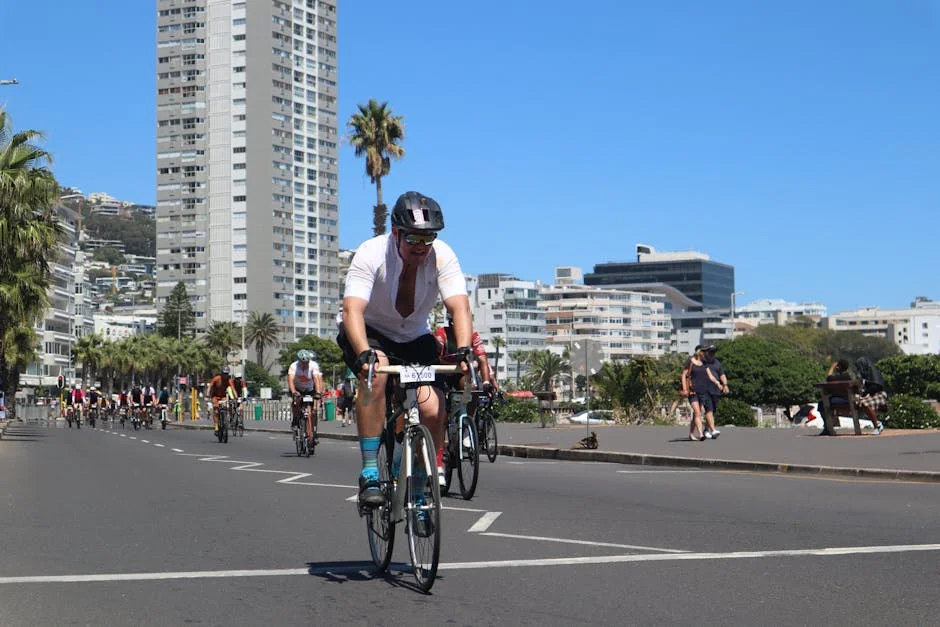
On March 12, 2023, Faiez Jacobs participated in the renowned Cape Town Cycle Tour, cycling not only for sport but to honour the memory of his late brother. This annual event, known for its scenic route and substantial participation, serves as a platform for community engagement and awareness on critical issues facing the continent.
Honouring a Legacy: The Personal Touch of the Tour
Faiez Jacobs took to the streets of Cape Town, cycling 109 kilometres in a race that draws thousands of participants from around the world. His journey was not merely about competition; it was a heartfelt tribute to his brother, whose life was tragically cut short. Jacobs, inspired by his brother’s passion for cycling, sought to carry his legacy forward by participating in this iconic event.
The Cape Town Cycle Tour Explained: More Than Just a Race
The Cape Town Cycle Tour is the largest timed cycling event globally, attracting around 35,000 cyclists annually. It showcases the stunning landscapes of Cape Town while promoting health, fitness, and community spirit. This year’s event drew attention not only for its sporting excellence but also for its role in promoting various socio-economic issues, including health, governance, and infrastructure development across Africa.
How the Cape Town Cycle Tour Supports African Development Goals
The significance of the Cape Town Cycle Tour extends beyond sport; it aligns closely with several African development goals. By promoting cycling, the event highlights the importance of sustainable transport, which is vital for reducing carbon footprints and enhancing urban mobility. As African cities face increasing challenges related to congestion and pollution, cycling offers a viable alternative that supports health and environmental sustainability.
Impact on Health and Infrastructure Development
In a continent where health challenges are prevalent, encouraging cycling can lead to improved public health outcomes. Regular cycling reduces the risk of chronic diseases and enhances overall physical fitness. Furthermore, the infrastructure developed for events like the Cape Town Cycle Tour can pave the way for better cycling routes and facilities in cities, promoting a culture of active transportation.
The Broader Implications for Nigeria and Beyond
As Nigeria grapples with infrastructural deficits and health crises, the lessons from the Cape Town Cycle Tour can be pivotal. Advocating for cycling as a mainstream form of transport can help alleviate some of these issues. The Nigerian government and local bodies could harness the spirit of events like the Cape Town Cycle Tour to encourage community cycling initiatives, eventually leading to better health outcomes and reduced traffic congestion in urban areas.
Looking Ahead: The Future of Cycling in Africa
With the growing interest in cycling in various African nations, there is an opportunity to foster a cycling culture that can contribute to economic growth and empowerment. As demonstrated by Faiez Jacobs, personal stories can ignite community engagement and drive awareness about critical issues. As cycling gains momentum, it is crucial for stakeholders to collaborate in creating policies that support cycling infrastructure, health education, and sustainable transport systems.
In conclusion, the Cape Town Cycle Tour not only celebrates athleticism but also serves as a reminder of the interconnectedness of health, infrastructure, and community development across Africa. As more individuals like Faiez Jacobs take to the roads to honour personal legacies, they contribute to a larger narrative of progress and hope for the continent.