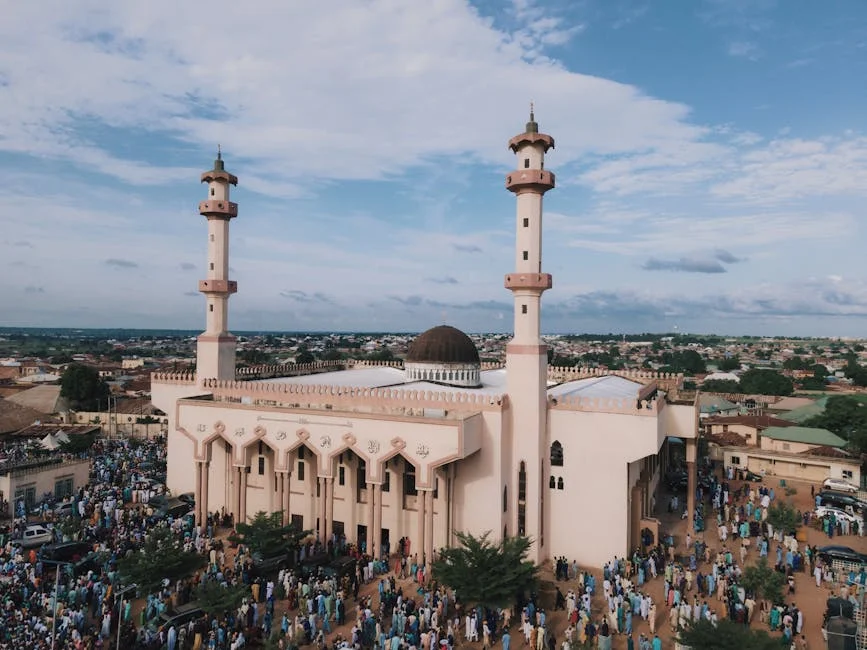
On the first Friday of Ramadan, thousands gathered for prayers at Al Aqsa Mosque in Jerusalem, while Gaza experienced devastating bombings. The juxtaposition of these events highlights the ongoing humanitarian crisis in Gaza and its resonance across Africa, particularly in Nigeria.
Context and Background
The Al Aqsa Mosque, a revered Islamic site, has long been a focal point of the Israeli-Palestinian conflict. As tensions in the region escalate, major religious events like Ramadan become flashpoints for violence and political unrest. Gaza, a densely populated enclave, has faced blockades and military strikes, leading to dire humanitarian conditions. The significance of these events extends beyond the Middle East, affecting the political and social landscapes of African nations, including Nigeria, which has a significant Muslim population.

Key Developments
On the first Friday of Ramadan, thousands of worshippers flocked to Al Aqsa Mosque for prayers, marking a deeply spiritual time for Muslims worldwide. Concurrently, intense airstrikes were reported in Gaza, leading to casualties and further destruction. The violence has prompted international calls for a ceasefire and increased humanitarian assistance to Gaza, where the situation is deteriorating rapidly.
Details and Evidence
Reports indicate that during the mass prayers at Al Aqsa, security forces were deployed to manage the crowds, amidst fears of clashes. Meanwhile, Gaza's health ministry reported numerous casualties from the ongoing strikes, with hospitals overwhelmed. Humanitarian organisations have highlighted the urgent need for food, medical supplies, and safe shelter for displaced persons, as the blockade has severely restricted access to essential services.
Analysis: African Development and Pan-African Perspective
The situation in Gaza is emblematic of broader issues affecting Africa, particularly in governance, health, and economic stability. The strife experienced in Gaza resonates with many African nations grappling with conflict and humanitarian crises. As Nigeria observes the situation, it reveals how interconnected global issues are; instability in one region can have profound implications elsewhere. For Nigeria, understanding the plight of Gaza is crucial not only for humanitarian reasons but also for its implications on regional security and economic partnerships.
Impact and Implications
The ongoing conflict in Gaza could influence Nigeria's foreign policy, particularly its stance on human rights and humanitarian interventions. Moreover, the sentiments surrounding the crisis may affect local dynamics, as communities rally around the Palestinian cause. The humanitarian response to Gaza will also serve as a litmus test for Nigeria's ability to engage with global issues while addressing its domestic challenges, including governance and infrastructure development.
Outlook
Looking ahead, analysts suggest that the situation in Gaza is unlikely to stabilise without a concerted international effort. For Nigerian readers, the unfolding events warrant close attention, as they may affect diplomatic relations and domestic policies. Observers are urged to watch for developments in humanitarian aid to Gaza and any shifts in Nigeria's foreign policy stance, as these could have significant repercussions for the continent's collective approach to crisis management.